النقاط الرئيسية
- Screen for companies with 10% revenue growth and 15% return on capital every year for a decade
- Buy that basket and hold it for 10 years without selling, whatever the headlines say
- Real estate, gold and high-fee funds quietly leak wealth once all costs are counted
- Use cheap index funds for large caps and pay for active management only where research helps
- Build the plan first: emergency fund, insurance, goals with dates, then the portfolio
داخل هذا الجزء
- Buy well, then forget
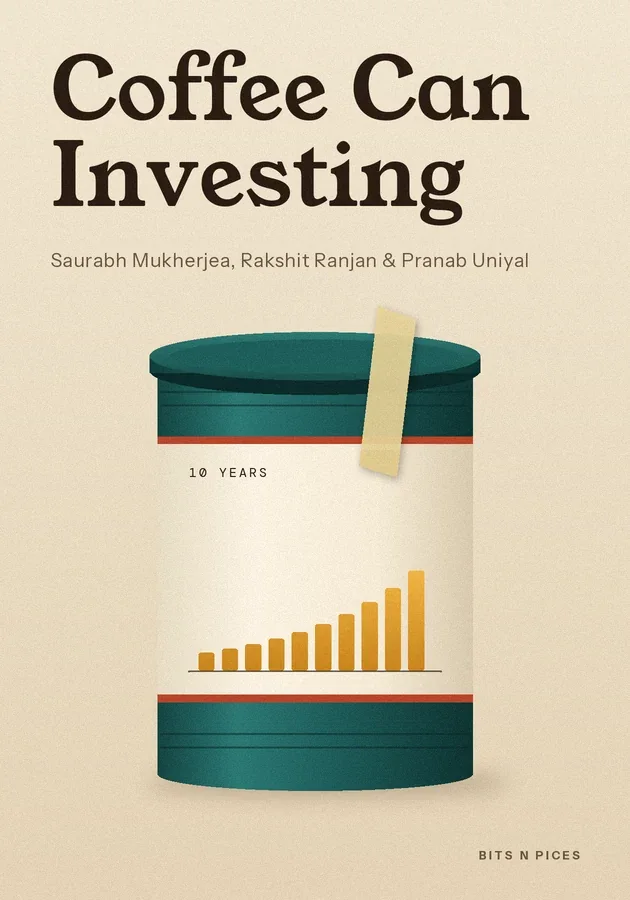
Imagine buying shares in a handful of excellent Indian companies, putting the certificates in a coffee tin, and not opening it for 10 years. That image, borrowed from an American fund manager who noticed that his most neglectful client did best, is the heart of this book.
- The two filters
The coffee can method starts with a screen, not a story. Look back 10 years and keep only companies whose revenue has grown by at least 10% in every single year, and whose return on capital employed has stayed at or above 15% every single year.
- Do nothing, on purpose
Once the portfolio is built, the rule is to hold it for 10 years without selling, whatever the headlines say. This feels lazy, but it is the source of the returns.
- Where Indian wealth quietly leaks
A large part of the book is about the alternatives Indians default to. Real estate, once loan costs, maintenance, stamp duty and years of illiquidity are counted, has often delivered returns that trail equities while feeling safer only because prices are not quoted daily.
- A plan before a portfolio
The book's case studies follow different families: a young couple starting out, a mid-career professional with loans and children, a retiree living on income. In each, the lesson is that a coffee can portfolio only helps when it sits inside a plan.
- Put it to work
This week, list every asset you own, including property, gold and deposits, and estimate what each has actually returned after costs and tax; the honesty is the point. Check the expense ratio of each mutual fund you hold and note how often it churns.
تعلمه بست طرق مختلفة
التصور، والخريطة الذهنية، والممارسة، والسيناريو، والتحدي، والمراجعة مكتوبة لهذا الكتاب.
سرد صوتي
استمع إلى هذا الجزء، بصوت Michael أو Bella.
اختبار وبطاقات تعليمية
اختبر ما قرأته واحتفظ به باستخدام التكرار المتباعد.
Bits AI
يجيب عن الكتاب أو القسم أو سؤال الاختبار الذي تقف عنده.