النقاط الرئيسية
- Shared fictions — money, nations, companies — let strangers cooperate at scale
- The agricultural revolution traded individual wellbeing for collective power
- Money is the most universal system of mutual trust ever devised
- Science's engine is the admission of ignorance
داخل هذا الجزء
- The cognitive revolution
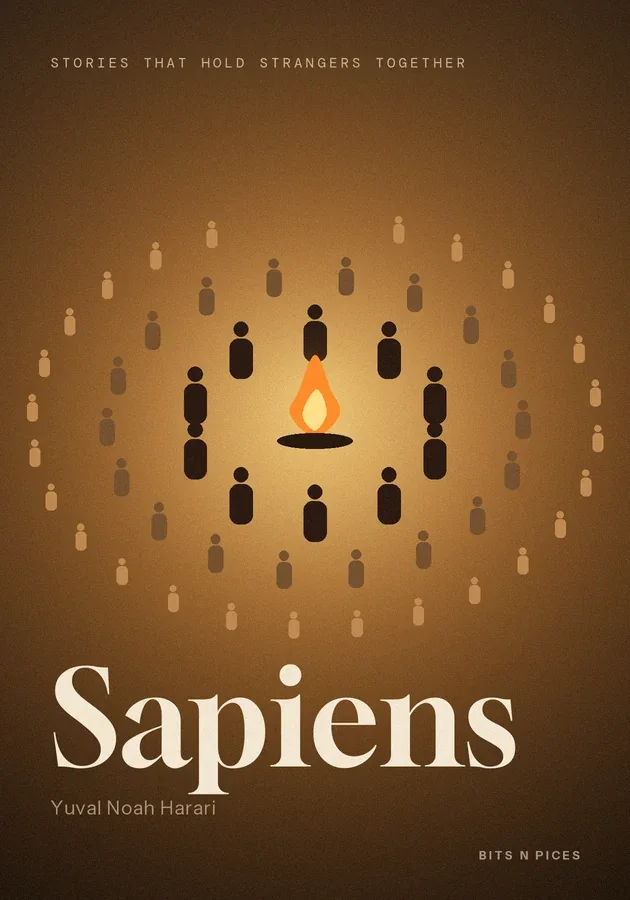
Around 70,000 years ago, Homo sapiens developed language flexible enough to describe things that don't exist — myths, gods, tribes, brands. This is Harari's central insight: shared fictions allow millions of strangers to cooperate.
- History's biggest fraud
Harari provocatively calls the agricultural revolution history's biggest fraud. Wheat domesticated us: farmers worked longer hours than foragers, ate worse diets, caught new diseases and lived in fear of drought — while population exploded.
- The unification of humankind
Three universal orders slowly stitched all humans into one world: money, empires and religions. Money deserves special awe — it is the only trust system that bridges any culture: people who worship different gods and hate each other's politics will still accept the same coin.
- The scientific revolution
Modern science began with a radical confession: we do not know. Pre-modern traditions claimed all important answers already existed in scripture; science institutionalized ignorance and married it to empire and capital — expeditions funded in hope of returns, discoveries feeding conquest and commerce.
تعلمه بست طرق مختلفة
التصور، والخريطة الذهنية، والممارسة، والسيناريو، والتحدي، والمراجعة مكتوبة لهذا الكتاب.
سرد صوتي
استمع إلى هذا الجزء، بصوت Michael أو Bella.
اختبار وبطاقات تعليمية
اختبر ما قرأته واحتفظ به باستخدام التكرار المتباعد.
Bits AI
يجيب عن الكتاب أو القسم أو سؤال الاختبار الذي تقف عنده.