

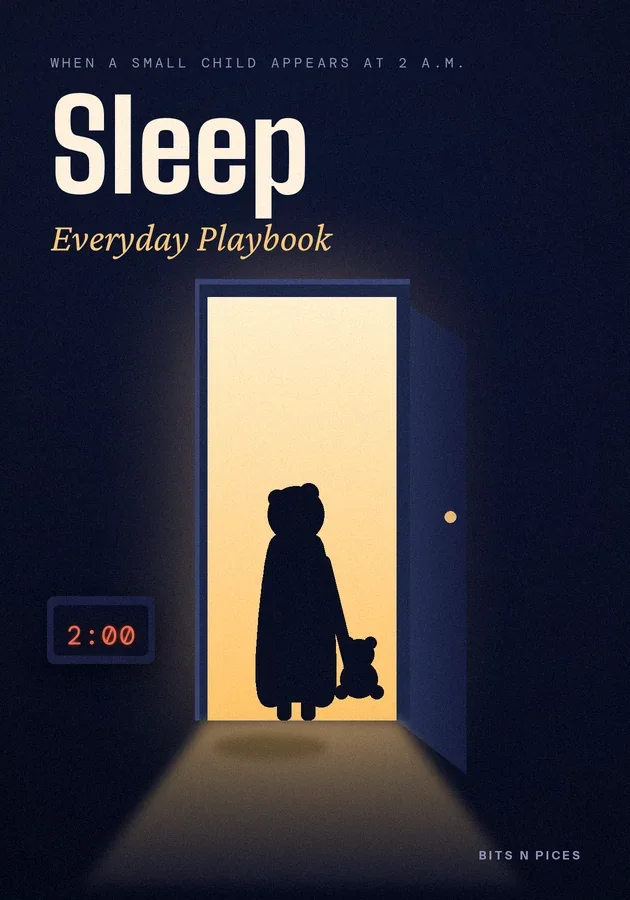
Sleep: Everyday Playbook
النقاط الرئيسية
- With a teenager whose clock runs late, negotiate where the phone sleeps and when the morning starts, not the minute they must feel sleepy.
- When a child appears at 2 a.m., make the return calm, brief and identical every time, and agree the policy with the other adult in daylight.
- Give worries an early-evening appointment with a pen, and between midnight and morning make no decisions and send no messages; the night mind exaggerates.
- When the household runs late, move one thing fifteen minutes earlier each week and start a shared last hour of dim lights and parked devices.
- Know your call-for-help signs, such as loud snoring with breathing pauses or sleepiness a teacher notices, and bring two weeks of notes to the doctor.
داخل هذا الجزء
- When your teenager's clock slides past midnight
Around puberty the body clock tends to shift later, often by an hour or two, so a fifteen-year-old who is wide awake at eleven is usually not being defiant. Early school starts then collide with a late clock.
- When a small child appears at your bedside
Night-time visits are common in young children, and the play depends less on what you decide than on deciding it once. Agree the family policy in daylight with the other adult: a calm return to their own bed, or a planned place in yours.
- When family worries wake you before dawn
Parents often carry the household's worries into the small hours. At three in the morning the mind is at its least balanced: problems feel bigger, solutions feel smaller, and a school fee or a work review becomes a catastrophe.
- When the whole household runs late
In many homes the real bedtime is set by the latest thing that happens: a 9. 30 dinner, homework finished at eleven, a television in the shared room.
- When exams, festivals or trips break the rhythm
Some weeks are meant to be different. The play is to bend the schedule without letting one special week become a lost month.
- When to stop managing and call for help
A playbook has limits, and knowing them is part of the advanced skill. For yourself, the call-for-help signs are loud snoring with pauses or gasps, dozing while driving or in meetings, poor sleep most nights for months that is wearing down your days, and low mood or constant worry that sleep changes do not touch; a doctor or counsellor is the right call.
تعلمه بست طرق مختلفة
التصور، والخريطة الذهنية، والممارسة، والسيناريو، والتحدي، والمراجعة مكتوبة لهذا الكتاب.
اختبار وبطاقات تعليمية
اختبر ما قرأته واحتفظ به باستخدام التكرار المتباعد.
Bits AI
يجيب عن الكتاب أو القسم أو سؤال الاختبار الذي تقف عنده.





