

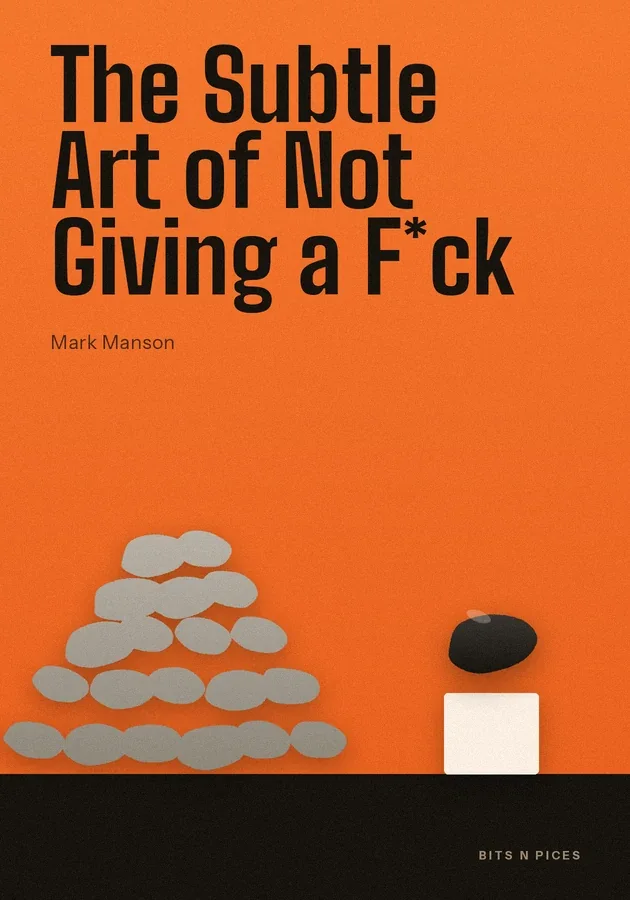
The Subtle Art of Not Giving a F*ck
النقاط الرئيسية
- You have limited energy to care, so spend it only on what matters
- Choose your problems wisely because life is a series of struggles, not their absence
- Good values are within your control and measured by process, not outcomes
- Taking responsibility for your reactions is different from blaming yourself
- Remembering you will die clarifies what actually deserves your attention
داخل هذا الجزء
- Caring less to live better
Imagine a man who is bothered by everything: a rude auto driver, a friend's Instagram post, a colleague's tone in a meeting. He is exhausted by evening, and none of it moved his life forward.
- Pick the problems you want
Manson says life never becomes problem-free. What changes is the quality of your problems.
- Good values versus bad values
Feeling bad is usually a sign of bad values, Manson argues, not of a bad life. Bad values depend on things outside your control or on outcomes: being liked by everyone, being right, being rich, never feeling pain.
- Responsibility is not blame
Manson makes a distinction that many readers find freeing. Fault is about who caused something.
- Uncertainty, failure and death
The later chapters push against comfortable certainty. Manson says you are wrong about many things and always will be, so the aim is to be a little less wrong each year.
- Put it to work
This week, write down the 3 things that bothered you most and ask honestly whether any of them will matter in 5 years. Pick one goal you say you want and list the specific pains it requires; if you are not willing to pay them, drop the goal without guilt.
تعلمه بست طرق مختلفة
التصور، والخريطة الذهنية، والممارسة، والسيناريو، والتحدي، والمراجعة مكتوبة لهذا الكتاب.
سرد صوتي
استمع إلى هذا الجزء، بصوت Michael أو Bella.
اختبار وبطاقات تعليمية
اختبر ما قرأته واحتفظ به باستخدام التكرار المتباعد.
Bits AI
يجيب عن الكتاب أو القسم أو سؤال الاختبار الذي تقف عنده.





