

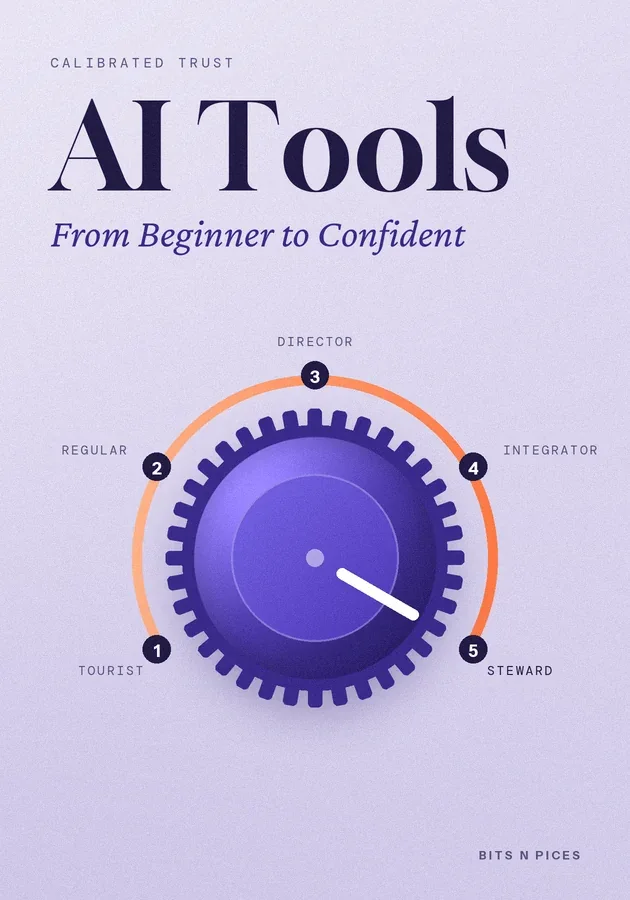
AI Tools: From Beginner to Confident
Kernaussagen
- Confidence with AI tools is calibrated trust: knowing when to rely on a result, when to check it, and when to refuse the tool.
- Climb from tourist to regular by giving one recurring job to one tool for about three weeks, always with your own material.
- Directors predict failure before reading: stale knowledge, invented references, flattering agreement and drift in long chats cause most surprises.
- In any chained workflow errors compound, so place a human checkpoint where mistakes are cheapest to catch and rerun a test set after updates.
- At the top rung, limit what tools can access, watch for hidden instructions, and decide deliberately which skills and decisions stay human.
In diesem Bit
- Five rungs from tourist to steward
Skill with AI tools grows in recognisable stages, and naming them tells you what to practise next. A tourist tries the tools on novelty questions and judges them by one impressive or one silly answer.
- Tourist to regular: one job, done reliably
The first climb is from novelty to usefulness. Tourists ask a tool to write a poem about their cat or explain black holes, enjoy the result and drift away.
- Regular to director: predicting the failure
Regulars fix mistakes after they see them; directors expect them. Four failures cover most surprises.
- Director to integrator: workflows with checkpoints
An integrator stops thinking in single requests and starts thinking in chains: recording to transcript, transcript to summary, summary to email. Chains save real time, and they carry a hidden risk.
- Integrator to steward: guarding what stays human
The top rung arrives when tools start acting rather than answering: reading inboxes, filling forms, booking meetings, even paying invoices. The steward's first concern is access.
- Practising deliberately and proving you moved up
Using a tool more does not move you up; practising at the edge of your rung does. Each week choose one stretch task just beyond your current level, attempt it, and get feedback that does not depend on how the result feels.
Lerne es auf sechs Arten
Visualisierung, Mindmap, Praxis, Szenario, Challenge und Review wurden für dieses Buch erstellt.
Quiz und Karteikarten
Teste, was du gelesen hast, und behalte es durch Spaced Repetition im Gedächtnis.
Bits AI
Es beantwortet Fragen zum Buch, zum Abschnitt oder zur Quizfrage, bei der du dich gerade befindest.





