

Prompting: From Beginner to Confident
Kernaussagen
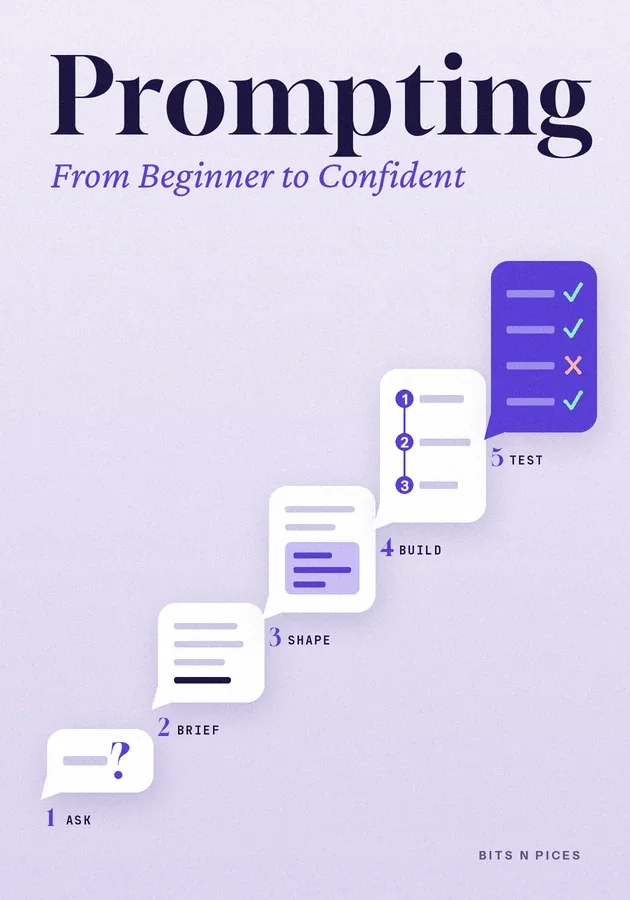
- Prompting skill climbs five rungs, from asking single questions to testing prompts against known inputs, and each rung has a visible signature.
- You move from asker to briefer the day you start stating the reader, the purpose and the limits before the request itself.
- A shaper controls output by showing one good example and naming the exact format, which beats describing the format in words.
- A builder breaks a big job into steps with one judgement each, so a mistake in step two never quietly poisons step five.
- You are confident when you keep a small test set, know what your prompt fails at, and can say when not to use the tool.
In diesem Bit
- The five rungs and how to spot your own
Prompting is a skill with stages, and knowing your stage tells you what to practise next. Rung one is the asker: you type a question the way you would into a search bar and take what comes.
- Rung one to two: from question to brief
The first climb is the biggest change for the least effort. An asker types "what should I put in a cover letter" and receives a list that fits everybody and nobody.
- Rung three: shaping output with examples and formats
Briefers still get answers in the wrong shape: a paragraph when a table was wanted, five bullet points when two sentences would do. The shaper fixes this with two moves.
- Rung four: breaking big jobs into steps
A large request such as "write my quarterly report" fails even with a perfect brief, because it hides a dozen judgements: which figures matter, what the story is, who reads the summary, how bad news is phrased. The builder separates them.
- Rung five: testing prompts like an engineer
The confident prompter treats an important prompt as something to be tested, not admired. The method is small.
- Signals you have moved up, and stalls
Each rung has a plain signal. You are past asker when every prompt names a reader.
Lerne es auf sechs Arten
Visualisierung, Mindmap, Praxis, Szenario, Challenge und Review wurden für dieses Buch erstellt.
Quiz und Karteikarten
Teste, was du gelesen hast, und behalte es durch Spaced Repetition im Gedächtnis.
Bits AI
Es beantwortet Fragen zum Buch, zum Abschnitt oder zur Quizfrage, bei der du dich gerade befindest.





