

Conversation Skills: Smart Habits & Practical Skills
Puntos clave
- Tie each new conversation habit to a cue that already happens every day, and make it small enough to do on your worst evening.
- Spend the first minute after someone comes home on their name and one question about them, and let jobs and reminders wait.
- Teach the hand-on-arm signal at a calm moment, keep the one-minute promise every time, and say sorry, go on when you interrupt.
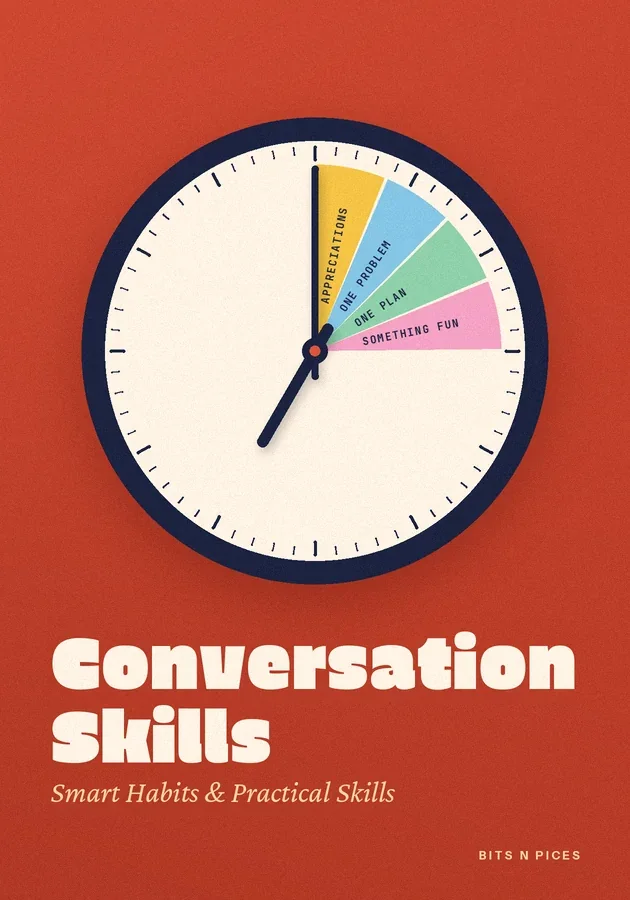
- Hold a fifteen-minute family meeting at the same time each week: appreciations, one problem, one plan, then something fun.
- Track family habits with light ticks on the fridge, and after a slip restart at the very next cue with the smallest version.
Dentro de este bit
- How a talking habit takes root
A habit is something you do with little thought because it is tied to a cue. Every habit has three parts.
- The first minute when someone comes home
The first minute after someone walks through the door sets the tone for the evening. In many homes it is filled with instructions: shoes off, bag away, have you done your homework?
- One voice at a time: the hand-on-arm signal
Interrupting means breaking in while someone else is still speaking. Young children do it because they fear the thought will vanish or that they will be forgotten.
- A weekly family meeting that runs itself
A family meeting is a short, regular conversation in which everyone, including the youngest, gets a turn to speak and be heard. The habit works best when it is small and predictable: fifteen minutes, the same time each week, and the same four steps.
- Guests and the hosting habit
Children learn social conversation through small, repeated roles at home, and visitors supply the practice. The hosting habit gives each child one fixed job when guests arrive: open the door and say hello, offer water or tea, or ask the guest one question, such as how was the journey?
- Tracking gently and restarting after a slip
Tracking means keeping a simple record so you can see a habit growing. For a family, the lightest version works best: a sheet on the fridge with one row per habit and a tick for each day it happened.
Aprende de seis maneras
Visualizar, Mapa Mental, Práctica, Escenario, Desafío y Repaso están escritos para este libro.
Cuestionario y flashcards
Pon a prueba lo que lees y reténlo con repetición espaciada.
Bits AI
Responde sobre el libro, la sección o la pregunta del cuestionario en la que te encuentras.





