

Exam Preparation: Modern Life Guide
Puntos clave
- Exams still reward what you can recall and use under time pressure, so spend most study time answering questions, not rereading or rewatching.
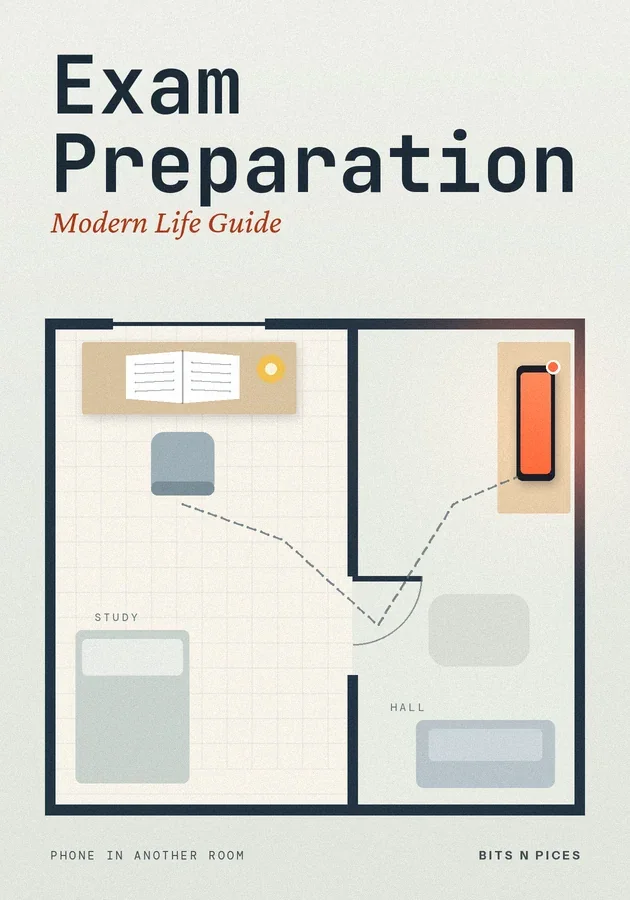
- During focused study keep your phone in another room, then use it on purpose for short flashcard bursts while commuting or waiting.
- Put yourself on a resource diet: the official syllabus, one main source per subject and real past papers, then stop collecting.
- Fix short study slots to routines that already happen, tell your household when they are, and try free resources before paying.
- Let AI quiz you from your own notes, check its answers against your textbook, and walk away from any offer of leaked papers.
Dentro de este bit
- What changed, and what never will
Exam preparation is the planned work between today and exam day that turns what you have covered into answers you can produce on demand. A few words recur.
- Making your phone work for you
For most people, the phone is the biggest change in how studying feels. A buzz, a preview, a quick look at a group chat, and a focused stretch is broken, plus the minutes it takes to settle again.
- Too many resources, too little practice
Information overload is the modern exam trap. There is always one more video, one more set of notes from a topper, one more channel promising the shortcut.
- Studying around work, family and money
Many candidates today are not full-time students. They prepare around shifts, school runs and bills, so the plan has to fit real weeks.
- AI helpers, online exams and group chats
Three newer parts of exam life need clear rules. AI chatbots make useful study partners when you control the material: paste your own notes and ask for ten practice questions, ask for a topic explained another way, or ask it to mark your answer against a syllabus point.
- A weekly rhythm that still works
Underneath all the new tools, the methods that work have barely changed. Spread study across the week instead of saving it for one long day, because returning to a topic after a gap makes it stick.
Aprende de seis maneras
Visualizar, Mapa Mental, Práctica, Escenario, Desafío y Repaso están escritos para este libro.
Cuestionario y flashcards
Pon a prueba lo que lees y reténlo con repetición espaciada.
Bits AI
Responde sobre el libro, la sección o la pregunta del cuestionario en la que te encuentras.





