

Cybersecurity: From Beginner to Confident
Points clés
- Place yourself honestly on the ladder first, because the next rung is always a specific habit, not a vague feeling of being careful.
- Prefer an authenticator app or a passkey over text-message codes where offered, and store recovery codes offline before you ever need them.
- Practise reading real sender addresses, link destinations and app permissions until spotting a fake takes seconds rather than luck.
- Confidence means you could lose a phone or laptop tomorrow and be working again within a day, because you have already rehearsed it.
- At the top rung you think like a defender: what you have, who wants it, how they would try, and what stops them.
À l'intérieur de ce bit
- The ladder and where you stand
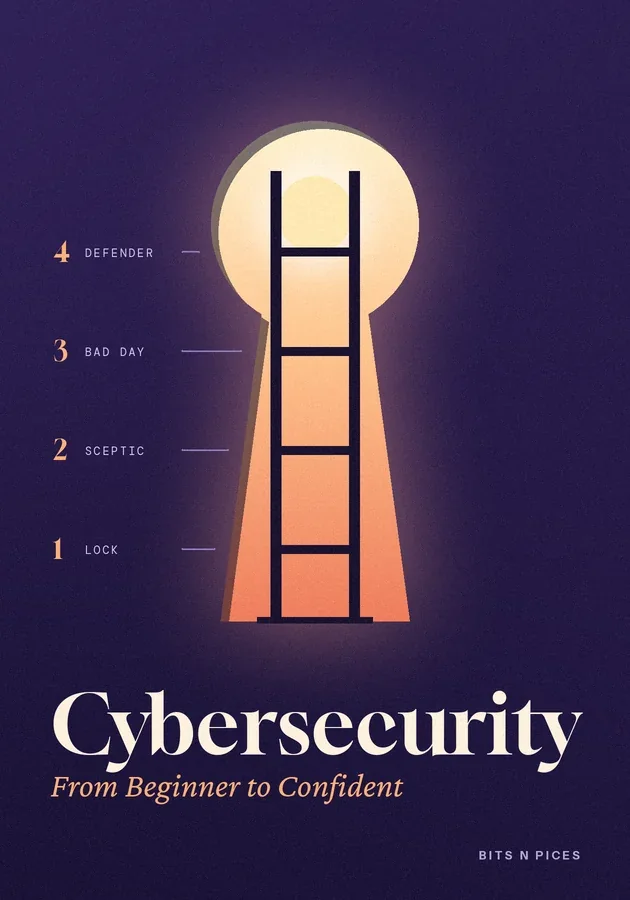
Confidence in cybersecurity is not a feeling; it is a set of habits you can see. This book uses four rungs.
- Rung one: lock the doors properly
You probably know to use unique passwords and a second factor. The first rung asks you to do both thoroughly and to choose well.
- Rung two: read the internet like a sceptic
The second rung is a reading skill, and like any reading skill it improves with deliberate practice. Start with web addresses.
- Rung three: plan for the bad day
Resilience is what separates a scare from a disaster. The third rung starts with an inventory: the accounts that matter, the email and phone number each one recovers to, and where the recovery codes live.
- Rung four: think like a defender
At the top rung you stop following lists and start reasoning. The tool is threat modelling, which sounds grand but is four plain questions.
- How to know you have moved up
Moving up the ladder should leave evidence, not just a sense of progress. For the first rung, the evidence is a password manager that flags no reused passwords and strong second factors on your key accounts.
Apprenez-le de six manières
Visualisation, Carte mentale, Pratique, Scénario, Défi et Révision sont disponibles pour ce livre.
Quiz et cartes mémoire
Testez ce que vous avez lu et retenez-le grâce à la répétition espacée.
Bits AI
Il répond sur le livre, la section ou la question de quiz sur laquelle vous vous trouvez.





