

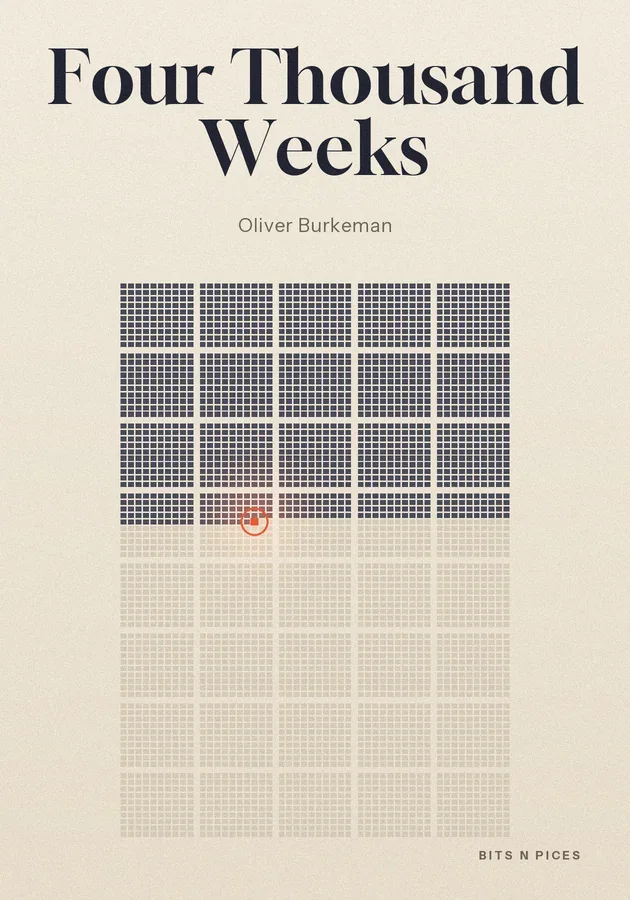
Four Thousand Weeks
Points clés
- Vous avez environ 4 000 semaines, et aucun système ne peut tout faire rentrer
- Être plus efficace attire souvent plus de demandes au lieu de vous libérer du temps
- Décidez à l'avance de ce que vous allez négliger et gardez seulement 3 grands projets en cours
- Faites certaines choses juste pour le plaisir, sans but ni mesure de performance
- Stop waiting for real life to begin and do the next necessary thing now
À l'intérieur de ce bit
- Votre vie fait environ 4 000 semaines
If you live to 80, you get roughly 4000 weeks. That is the whole budget, and no productivity system can stretch it.
- L'efficacité ne fait qu'alimenter la machine
Here is a trap most of us fall into. You get better at clearing email, so people send you more email.
- Choisissez ce qu'il faut négliger
Since you cannot do everything, the real skill is choosing what to leave undone, and doing it calmly. Burkeman offers three habits.
- Se reposer sans but précis
Modern life treats rest as fuel for more work. Even hobbies get turned into side hustles or fitness targets.
- Le futur n'arrive jamais vraiment
Many of us live as if real life will start later, once the exam is cleared, the promotion lands or the loan is paid off. Burkeman points out that this later never comes, because a mind trained on the future keeps finding new futures to wait for.
- Passez à l'action
Start by naming your 3 open projects and moving the rest to a someday list you promise not to touch until one finishes. Block the first hour of tomorrow for the work you keep postponing, and treat that block like a doctor's appointment.
Apprenez-le de six manières
Visualisation, Carte mentale, Pratique, Scénario, Défi et Révision sont disponibles pour ce livre.
Version audio
Écoutez ce bit, lu par Michael ou Bella.
Quiz et cartes mémoire
Testez ce que vous avez lu et retenez-le grâce à la répétition espacée.
Bits AI
Il répond sur le livre, la section ou la question de quiz sur laquelle vous vous trouvez.





