High Output Management
Points clés
- A manager's output is the output of the teams they influence, not their own tasks
- Pick high leverage activities: one hour that lifts many people's work for weeks
- Run regular one on ones where the report sets the agenda and you mostly listen
- Measure inputs early with indicators, and pair every metric with a counter metric
- Train your people yourself; low motivation and low skill are the only two causes of poor performance
À l'intérieur de ce bit
- Le management comme ligne de production
Picture a small breakfast cafe that has to serve a soft boiled egg, toast and coffee together, hot, within a few minutes. The egg takes longest, so everything else has to be timed around it.
- Votre résultat, c'est celui de votre équipe
Grove's core equation is simple: a manager's output equals the output of their own team plus the output of the neighbouring teams they influence. Nothing you do alone counts unless it raises what those groups produce.
- La quête du levier
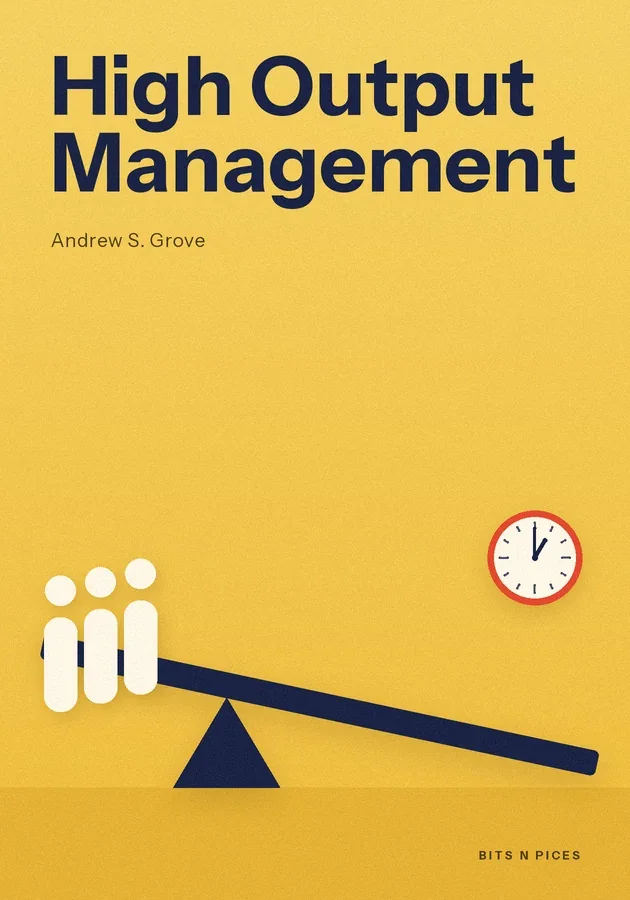
Some activities multiply and some barely add, and Grove calls the ratio leverage. High leverage moves affect many people, or affect one person for a long time.
- Le point individuel
Grove's most copied idea is the regular one on one between a manager and each direct report. Its purpose is mutual teaching and exchange of information, not status updates you could read in an email.
- Indicateurs, prévisions et métriques croisées
If you only look at final results, you learn about problems after they are expensive. Grove wants managers to watch a few leading indicators every morning, the way a factory checks raw material and machine downtime before the finished goods arrive.
- Passez à l'action
This week, write down what your team actually produces and which single step limits it, then plan around that step. Look at last week's calendar and mark each block as high, low or negative leverage; move one hour from the low column to the high column.
Apprenez-le de six manières
Visualisation, Carte mentale, Pratique, Scénario, Défi et Révision sont disponibles pour ce livre.
Version audio
Écoutez ce bit, lu par Michael ou Bella.
Quiz et cartes mémoire
Testez ce que vous avez lu et retenez-le grâce à la répétition espacée.
Bits AI
Il répond sur le livre, la section ou la question de quiz sur laquelle vous vous trouvez.