

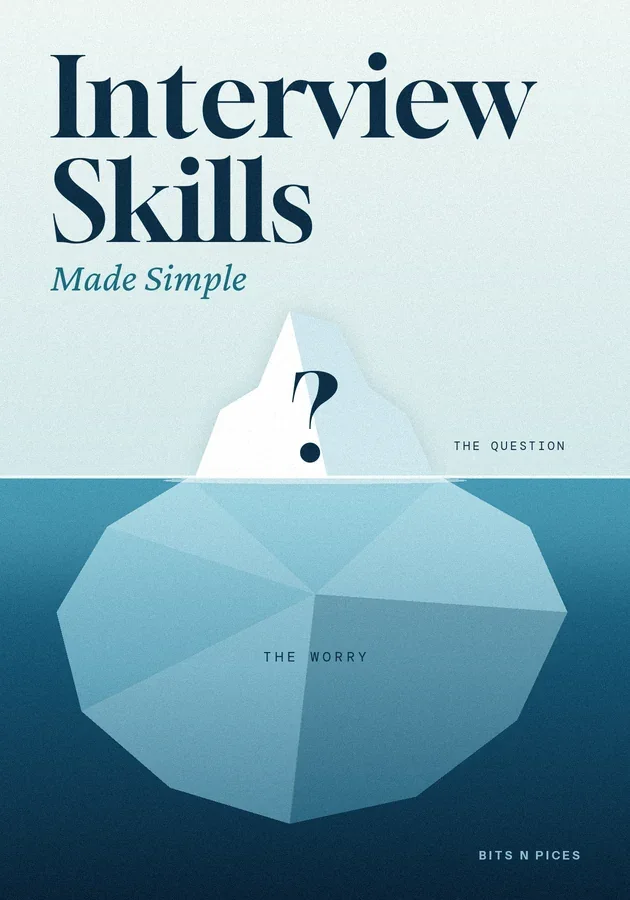
Interview Skills Made Simple
Points clés
- An interview is a fit conversation in both directions, not an exam, so your job is to be clear and honest rather than perfect.
- Three prepared stories, one honest reason for wanting the role and two real questions cover most of what any interviewer will ask.
- Every question has a worry behind it; answer the worry the interviewer actually has, not just the words they used.
- Children learn interviewing from watching a parent who is not frightened of it, so prepare aloud at home and coach lightly.
- A rejection is information about fit delivered on one afternoon; a five-minute family debrief turns it into next time's advantage.
À l'intérieur de ce bit
- An interview is a conversation with a job
Strip away the nerves and an interview is two people trying to answer one question: would this work? The employer wants to know whether you can do the job, whether you will actually do it, and whether working beside you will be bearable.
- Five myths that make it harder
The first myth is that the most qualified person gets the job. Usually the clearest person does, because the interviewer can only judge what they can see.
- The twenty percent that does the work
Most interview advice is noise. Three things carry nearly all the weight.
- The question behind the question
At an advanced level you stop answering the words and start answering the worry. Tell me about a time you disagreed with a manager is not curiosity about your past; it is checking whether you will be a nightmare to manage or a pushover.
- Helping your child without taking over
Children rarely learn interviewing from advice. They learn it from watching a parent who is not frightened of it.
- When it goes wrong and what comes after
Interviews go wrong in ordinary ways. Your mind goes blank; the fix is to say, let me think about that for a moment, and then think.
Apprenez-le de six manières
Visualisation, Carte mentale, Pratique, Scénario, Défi et Révision sont disponibles pour ce livre.
Quiz et cartes mémoire
Testez ce que vous avez lu et retenez-le grâce à la répétition espacée.
Bits AI
Il répond sur le livre, la section ou la question de quiz sur laquelle vous vous trouvez.





