

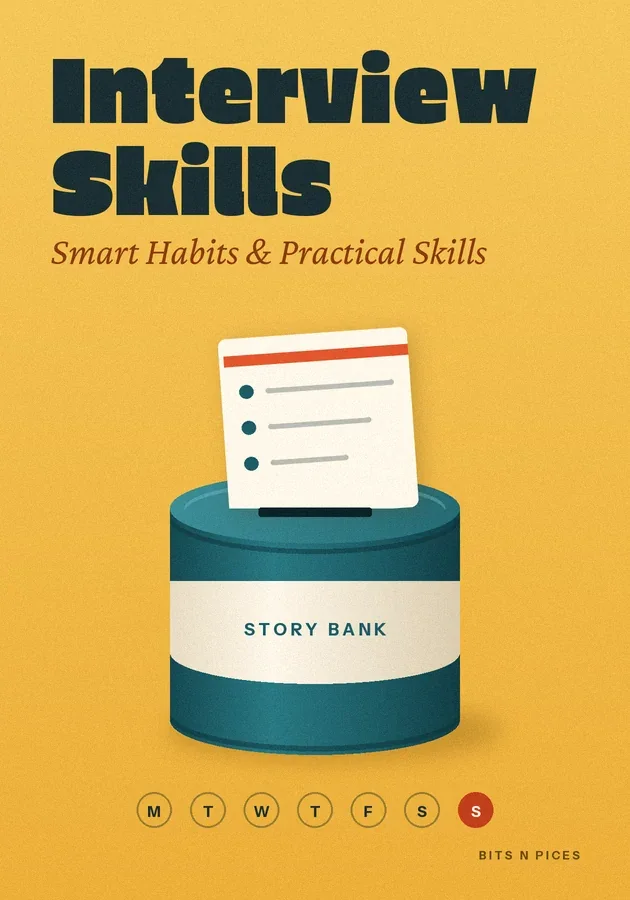
Interview Skills: Smart Habits & Practical Skills
Points clés
- Interview performance is built in the quiet months, so design a small weekly routine rather than cramming the night before a call.
- Keep a family story bank: ten minutes each Sunday capturing one thing you or your child did, with the problem, the action and the result.
- Attach practice to a cue you already have, such as the dinner table question game, and lower the friction until skipping feels harder than doing.
- Run home mock interviews with fixed rules: a timer, one round of feedback that names a strength first, and a recording you both watch once.
- After every real interview, write a five-line debrief within the hour, because patterns across debriefs teach more than any single result.
À l'intérieur de ce bit
- Why interviews reward routines, not bursts
Most families treat an interview like a fire drill. A letter arrives, panic follows, and everyone spends three evenings frantically searching for common questions.
- The Sunday story bank
The single most useful interview habit is a story bank: a running list of things you have actually done, each written as a small story with the situation, what you did and what changed as a result. Interviewers rarely want theory; they want evidence, and evidence is easiest to produce when it was captured close to the moment it happened.
- Cues and friction: making practice automatic
A habit needs a cue, a routine that follows it and as little friction as possible in between. For interview skills, the strongest cue is one your family already has.
- Running a home mock interview that helps
Mock interviews at home fail for two reasons: they are either too soft to teach anything or so harsh that the child never agrees to a second one. Fix both with rules agreed before you start.
- Tracking: the five-line debrief
Practice without tracking drifts. The lightest tracking tool that still works is a debrief written within an hour of every real interview, while the details are fresh.
- Keeping it going when nothing is happening
The hardest stretch is the quiet one: no interviews scheduled, a rejection last month, a child who says practising is pointless. Habits survive this when they are small enough to keep and tied to identity rather than to results.
Apprenez-le de six manières
Visualisation, Carte mentale, Pratique, Scénario, Défi et Révision sont disponibles pour ce livre.
Quiz et cartes mémoire
Testez ce que vous avez lu et retenez-le grâce à la répétition espacée.
Bits AI
Il répond sur le livre, la section ou la question de quiz sur laquelle vous vous trouvez.





