Never Split the Difference
Points clés
- Négocier repose sur l'écoute et les émotions, pas sur la poire coupée en deux
- Répétez les derniers mots entendus en miroir pour relancer l'échange et en savoir plus
- Nommez les émotions de l'autre à voix haute pour désamorcer les tensions et créer la confiance
- Visez un « c'est exact », pas un simple « oui » poli et creux
- Posez des questions ouvertes avec « comment » et « quoi » pour amener l'autre à régler votre problème
À l'intérieur de ce bit
- Négocier, c'est écouter, pas raisonner
Imagine a bank robbery with hostages inside, and a negotiator on the phone whose only tools are his voice and his ears. That was the job of Chris Voss, a former FBI hostage negotiator, and this book turns what he learned in those situations into a method for everyday bargaining.
- L'effet miroir et la mise de mots ouvrent le dialogue
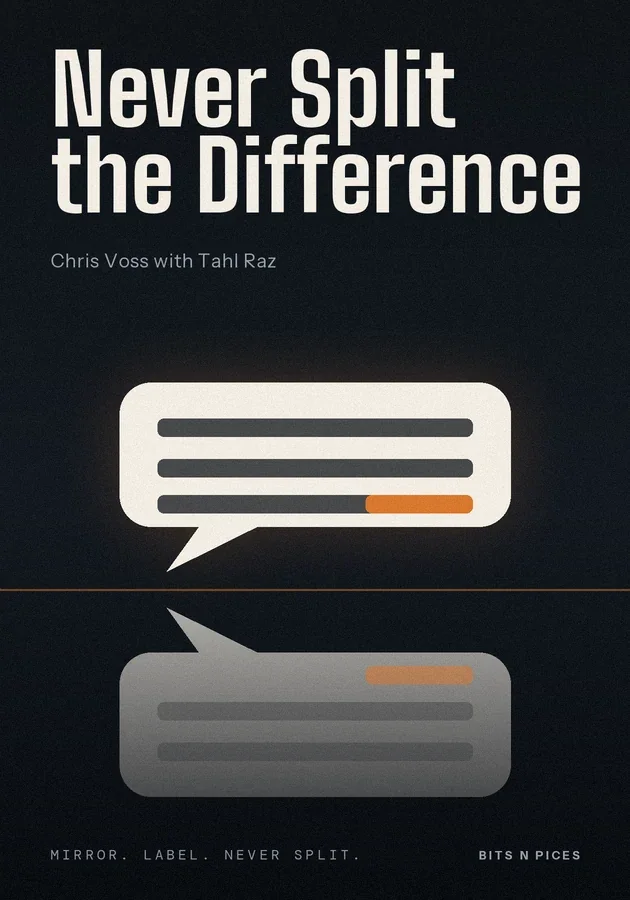
Two of the simplest tools in the book are mirroring and labelling. Mirroring means repeating the last 1 to 3 words the other person said, with a slight upward tone, and then staying quiet.
- Visez le « c'est exact », pas le « oui »
Most people chase a yes, but Voss argues that yes is often worthless. There is the counterfeit yes people give to escape a pushy salesperson, and the confirmation yes that commits to nothing.
- Les questions ciblées font le gros du travail
When someone makes an unreasonable demand, the instinct is to argue or refuse. Voss offers a better move: ask a calibrated question, an open question beginning with how or what that pushes the other side to work on your problem.
- Négocier ferme et traquer les cygnes noirs
When the conversation finally turns to numbers, Voss lays out a structured approach he calls the Ackerman model. Set your target, then open with an anchor far from it, and move in progressively smaller steps so each concession feels like you are running out of room.
- Passez à l'action
This week, practise mirroring in a low-stakes chat: repeat the last few words a colleague says, stay silent, and notice how much more they tell you. In your next disagreement, label the other person's emotion before you make your point, and watch the temperature drop.
Apprenez-le de six manières
Visualisation, Carte mentale, Pratique, Scénario, Défi et Révision sont disponibles pour ce livre.
Version audio
Écoutez ce bit, lu par Michael ou Bella.
Quiz et cartes mémoire
Testez ce que vous avez lu et retenez-le grâce à la répétition espacée.
Bits AI
Il répond sur le livre, la section ou la question de quiz sur laquelle vous vous trouvez.