

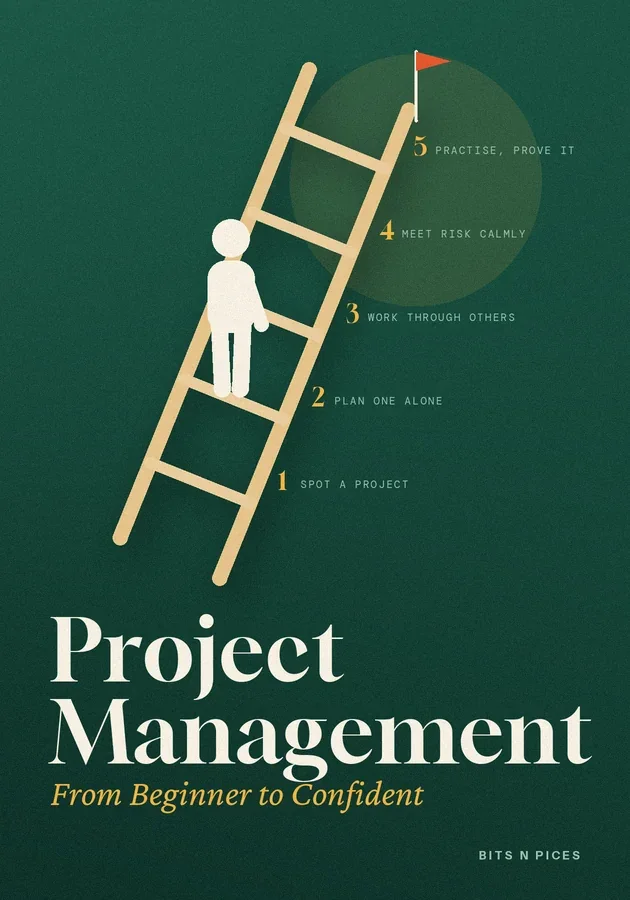
Project Management: From Beginner to Confident
Points clés
- A project is temporary work with a clear finish line, so your first skill is writing down what done looks like before you start.
- Break any project into tasks small enough to finish in a day or two, then mark which tasks must wait for others.
- When work runs through other people, ask for a weekly three-line update of done, next and blocked, and treat silence as a question.
- Write serious risks down early with a response and a watcher, and answer every change request with its price in time, cost or scope.
- You climb by running small real projects, reviewing each one honestly and keeping a one-page record of what you learned.
À l'intérieur de ce bit
- The five rungs from novice to confident
Nobody becomes confident at project management by reading about it. People climb a ladder of experience, and it helps to know which rung you are standing on.
- Rung one: spotting a project in your week
A project is temporary work that produces something new and has a clear finish line. Routine work, which managers call operations, repeats: payroll every month, the Monday stock count.
- Rung two: planning one small project alone
Rung two is where you turn a goal into a plan you could hand to someone else. Start with the finish line written in one or two sentences.
- Rung three: getting work done through others
The jump to rung three is the biggest, because you can no longer do everything yourself. Three roles appear on almost every project.
- Rung four: meeting risk and change calmly
A risk is something that might happen and would hurt the project if it did. An issue is a risk that has already happened.
- Rung five: practising deliberately and proving it
Confidence comes from running real projects and learning from each one on purpose. Before a project starts, pick one skill to stretch, such as estimating or running meetings.
Apprenez-le de six manières
Visualisation, Carte mentale, Pratique, Scénario, Défi et Révision sont disponibles pour ce livre.
Quiz et cartes mémoire
Testez ce que vous avez lu et retenez-le grâce à la répétition espacée.
Bits AI
Il répond sur le livre, la section ou la question de quiz sur laquelle vous vous trouvez.





