The Little Book of Common Sense Investing
Points clés
- Les investisseurs obtiennent le rendement du marché moins les frais : les coûts font la différence
- Achetez tout le marché via un fonds indiciel mondial à bas coût au lieu de chercher les gagnants
- La plupart des fonds actifs sous-performent l'indice à long terme et les gagnants changent
- Misez sur les bénéfices et dividendes des entreprises ; ignorez les sautes d'humeur du marché
- Faites simple : choisissez une répartition actions-obligations, rééquilibrez peu, gardez des décennies
À l'intérieur de ce bit
- Tout posséder, ne presque rien payer
John C. Bogle founded Vanguard and launched the first index fund for ordinary investors in 1976, and this little book is his case in plain language.
- L'implacable arithmétique des coûts
Bogle's foundation is a piece of arithmetic no marketing can escape. Before costs, the average rupee invested in the market earns exactly the market return, because the market is the sum of all its investors.
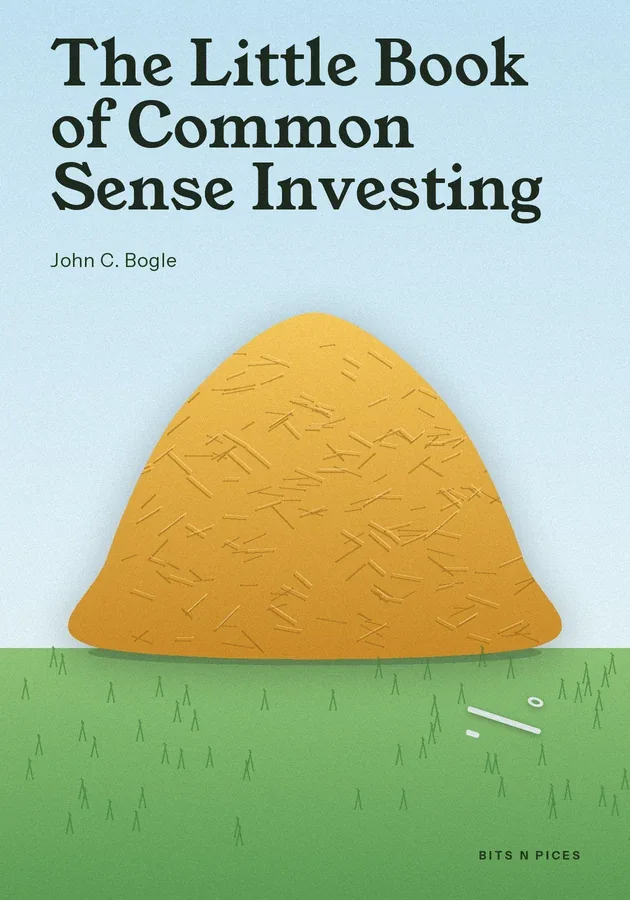
- Buy the whole haystack
Rather than searching for the few stocks or fund managers that will beat the market, Bogle says to own all of them through a broad, low-cost index fund. His evidence is that most actively managed funds trail their benchmark over a decade or more, that the ones which win rarely keep winning, and that many of the losers quietly disappear, making the survivors look better than they were.
- Spéculer n'est pas investir
Bogle draws a line between the return a business earns, which is dividends plus earnings growth, and the return the market adds or subtracts through changes in how much investors will pay per rupee of earnings. Over a decade, the first is reliable and the second is noise; over a century, the second averages out to almost nothing.
- Faites simple, visez long
Bogle's practical advice is almost boring, which he takes as a compliment. Hold a broad equity index fund and, as you age or your nerves require, a broad bond index fund; a common rule of thumb puts roughly your age in percent into bonds, adjusted for your situation.
- Passez à l'action
This week, look up the expense ratio of every fund you hold and write the numbers side by side; anything above 1% deserves a hard question. Check what share of your portfolio sits in broad, low-cost index funds and consider sending new SIP money there first.
Apprenez-le de six manières
Visualisation, Carte mentale, Pratique, Scénario, Défi et Révision sont disponibles pour ce livre.
Version audio
Écoutez ce bit, lu par Michael ou Bella.
Quiz et cartes mémoire
Testez ce que vous avez lu et retenez-le grâce à la répétition espacée.
Bits AI
Il répond sur le livre, la section ou la question de quiz sur laquelle vous vous trouvez.