

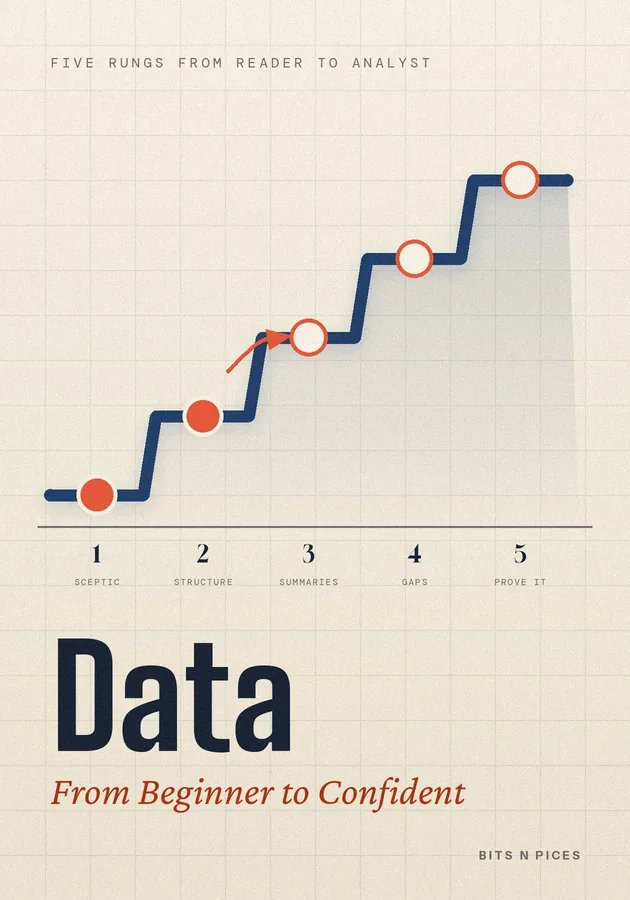
Data: From Beginner to Confident
Poin penting
- Place yourself on the data ladder by the weakest task you can finish unaided, then practise at the rung just above it, not the one you enjoy.
- Before any formula, reshape the data so each row is one event and each column one measure; most analysis errors begin in messy structure.
- Report a median and a spread beside any average, because one outlier or a lopsided group can make the mean describe nobody at all.
- Treat every gap between groups as a question about size, sample, consistency and hidden third factors before you treat it as a cause.
- Prove you have moved up with a small reproducible project you can explain to a non-expert, including what the data cannot tell you.
Di dalam bit ini
- Five rungs from reader to trusted analyst
Data confidence is not one skill but a ladder of five rungs, and each rung is defined by what you can do without help. A reader can look at a table or chart and say what it shows and what it hides.
- Rung one: reading data like a sceptic
The first rung sounds easy and is where most expensive mistakes begin. Reading data means asking, before any calculation, where the numbers came from, who was counted, who was left out and what one row actually represents.
- Rung two: structure before any formula
Tidying is the least glamorous rung and the one that saves the most time later. The rule is short: one row for each event or thing, one column for each measure, one kind of value in each column.
- Rung three: averages, spreads and honest summaries
A summary is a promise that one number fairly stands for many. The mean keeps that promise only when values cluster evenly.
- Rung four: gaps, causes and hidden factors
The questioner rung is where confidence turns into judgement. When two groups differ, ask four things before explaining why.
- Proving you have climbed: practice and evidence
Moving up takes deliberate practice, which is different from simply using spreadsheets at work every day. Choose a dataset slightly beyond your comfort, set one precise question, work it through, then compare your approach with a model answer or an experienced colleague and write down the specific mistake you made.
Pelajari dengan enam cara
Visualisasi, Peta Konsep, Latihan, Skenario, Tantangan, dan Ulasan tersedia untuk buku ini.
Kuis dan flashcard
Uji apa yang kamu baca dan ingat terus dengan pengulangan berjarak.
Bits AI
Menjawab tentang buku, bagian, hingga pertanyaan kuis yang sedang kamu kerjakan.





