

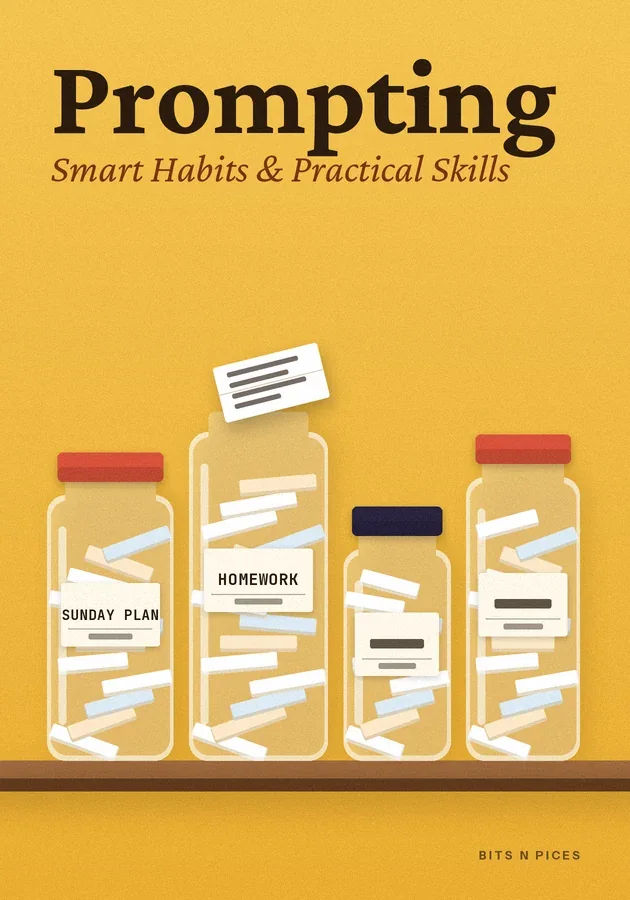
Prompting: Smart Habits & Practical Skills
Poin penting
- A prompting habit is a writing habit: pause for three lines, goal, reader and shape, before you type anything into the box.
- Attach prompting routines to moments your family already has, such as Sunday planning or homework hour, instead of relying on willpower.
- Keep a shared prompt shelf of named, dated prompts the household can reuse, so a good result becomes repeatable rather than lucky.
- Make the second attempt cheaper than a fresh start by ending every prompt with a question about what you left out.
- Teach children to write the brief before the prompt, and treat a slipped week as data for your monthly review, not as failure.
Di dalam bit ini
- Why prompting is a habit, not a trick
Most people learn prompting as a bag of tricks: a clever phrase here, a magic word there. Tricks fade because the tools change and because a trick needs remembering at the exact moment you are tired and in a hurry.
- The three-line pause before you type
The core habit is a pause. Before typing into any AI tool, write three lines: what I want, who it is for, and what shape it should come back in.
- The household prompt shelf
Good prompts are assets, and most families lose them the moment the chat window closes. A prompt shelf fixes that: one shared document, on paper or in a notes app, where any household member stores a prompt that produced something worth keeping.
- The follow-up question habit
The first answer is rarely the best one, and everybody knows this, yet most people either accept the first answer or start over from scratch. The practical habit sits between those: end every prompt with a question that invites a second turn.
- Tracking: knowing whether the habits are working
A habit you cannot see is a habit you cannot keep. The lightest tracking that works is a two-column log: on the left, the prompt job, such as essay outline, invoice reminder or holiday plan; on the right, one word for how it went: kept, fixed or wasted.
- Bringing children along, and restarting after a slip
Children learn prompting habits the way they learn table manners: by watching, then by being asked to do it themselves with gentle correction. The most useful thing a parent can do is prompt out loud.
Pelajari dengan enam cara
Visualisasi, Peta Konsep, Latihan, Skenario, Tantangan, dan Ulasan tersedia untuk buku ini.
Kuis dan flashcard
Uji apa yang kamu baca dan ingat terus dengan pengulangan berjarak.
Bits AI
Menjawab tentang buku, bagian, hingga pertanyaan kuis yang sedang kamu kerjakan.





