

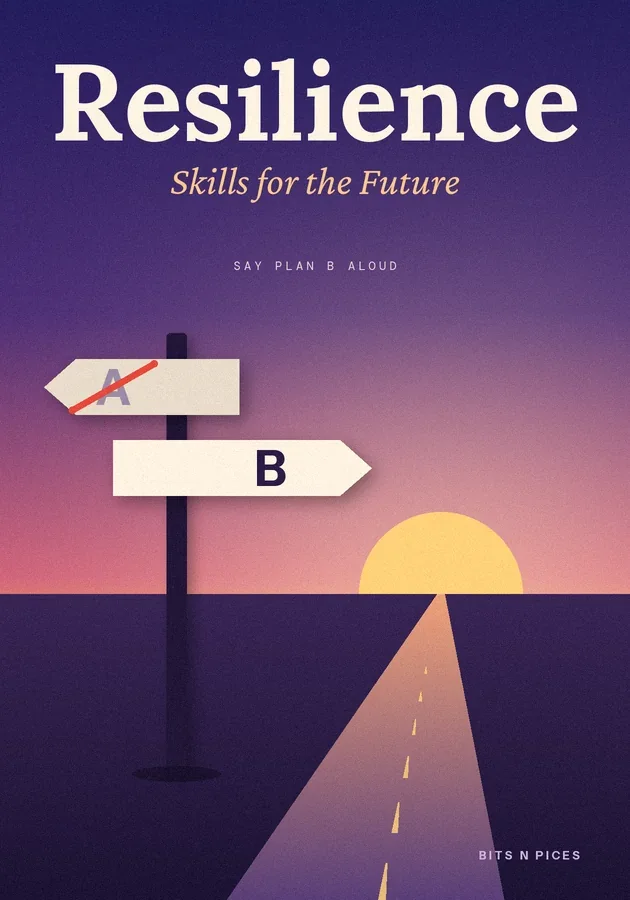
Resilience: Skills for the Future
Poin penting
- Your children are likely to face more change than you did, so resilience, the skill of adapting and recovering, may matter as much as any school subject.
- Model flexible thinking out loud at home by saying 'plan A didn't work, so what's our plan B?', so children hear adapting as normal.
- Let your children watch you learn something new and be bad at it first, because being a comfortable beginner is a skill the future will keep testing.
- As screens and AI take on more tasks, protect patience, empathy and face-to-face connection with regular screen-free family time.
- Talk about big-world worries in small, honest, age-appropriate pieces, and pair every worry with an action the family can take together.
Di dalam bit ini
- Why tomorrow will ask for more bouncing back
Resilience means the ability to adapt when life changes and to recover after something hard. It is not a gift some children are born with.
- Adaptability: changing plans without panic
Adaptability is the ability to adjust calmly when a plan stops working. Adults use it all the time, but children usually see only the final decision, not the thinking behind it.
- Learning to learn, again and again
Many of the jobs your children will do have not been invented yet, and the tools they use will keep changing. The skill that lasts is learning itself: being willing to be a beginner, to be slow and clumsy at first, and to keep going anyway.
- Staying human in a world of screens and AI
As machines and AI tools take on more tasks, the skills that stay valuable are the ones they handle least well: understanding other people's feelings, working in a team, staying patient with a slow problem and sitting with boredom long enough for your own ideas to arrive. These human skills are also the backbone of resilience, because people mostly recover from hard times through relationships.
- Talking with children about big-world worries
Children hear about climate change, conflict and job losses earlier than most parents expect, from school, friends and screens. Silence does not protect them; it leaves them to fill the gaps with guesses, which are often scarier than the truth.
- A family plan for the next ten years
You cannot plan your child's future, but you can plan the skills your home practises. Choose five to focus on as a family: managing feelings, changing plans, learning new things, connecting with people and asking for help.
Pelajari dengan enam cara
Visualisasi, Peta Konsep, Latihan, Skenario, Tantangan, dan Ulasan tersedia untuk buku ini.
Kuis dan flashcard
Uji apa yang kamu baca dan ingat terus dengan pengulangan berjarak.
Bits AI
Menjawab tentang buku, bagian, hingga pertanyaan kuis yang sedang kamu kerjakan.





