

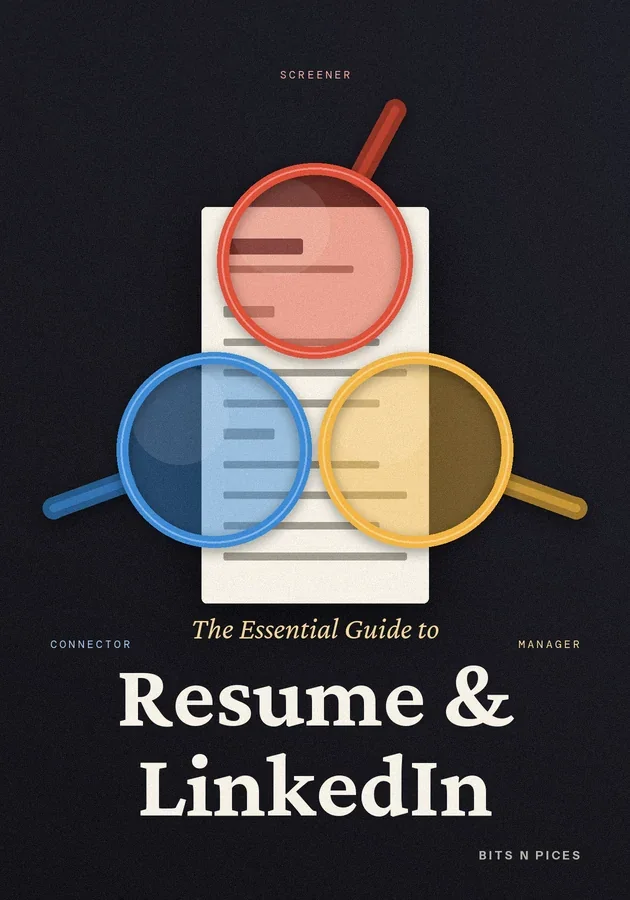
The Essential Guide to Resume & LinkedIn
Poin penting
- Write for three readers at once: the screener checking the match, the manager judging how you work, and the connector who might introduce you.
- Choose your structure on purpose: chronological when recent roles match the target, a hybrid block when your best evidence sits elsewhere.
- Back important claims with a mix of numbers, artefacts and other people's words, and say we for team wins and I for your part.
- Treat your profile as a meeting place: fewer, real connections and a three-sentence forwardable blurb make introductions easy.
- Match your visibility to your goal, and ignore any advice that helps no reader, such as fancy templates, match scores and endorsement counts.
Di dalam bit ini
- Three readers, three questions
Every resume and profile is read by at least three kinds of people, and each asks something different. The screener, often a recruiter juggling many roles, asks whether you match: the right kind of experience, the right level, the right place.
- Structure is a strategic choice
Most resumes use reverse-chronological order: latest role first, each with dates and results beneath. It suits anyone whose recent roles point at the target, and most readers expect it.
- Proof comes in three currencies
Claims persuade only when something backs them, and proof comes in three currencies. Numbers are the first: volumes, speed, money, error rates, before and after.
- The profile is a meeting place
A resume waits in an inbox; a profile sits inside a network, and that changes what it is for. Much of its value comes not from strangers finding you but from people who already half-know you: a former colleague who notices your new headline, a friend's manager who looks you up before an introduction.
- How visible to be, and when
LinkedIn offers a spectrum of visibility, from a quiet, complete profile to regular posting, and each point on it has a cost. Silence costs nothing but leaves anyone who looks you up with only the static page.
- What to prioritise and what to ignore
The five ideas fit together in order. Knowing your three readers tells you what each part of the page must do.
Pelajari dengan enam cara
Visualisasi, Peta Konsep, Latihan, Skenario, Tantangan, dan Ulasan tersedia untuk buku ini.
Kuis dan flashcard
Uji apa yang kamu baca dan ingat terus dengan pengulangan berjarak.
Bits AI
Menjawab tentang buku, bagian, hingga pertanyaan kuis yang sedang kamu kerjakan.





