

重要なポイント
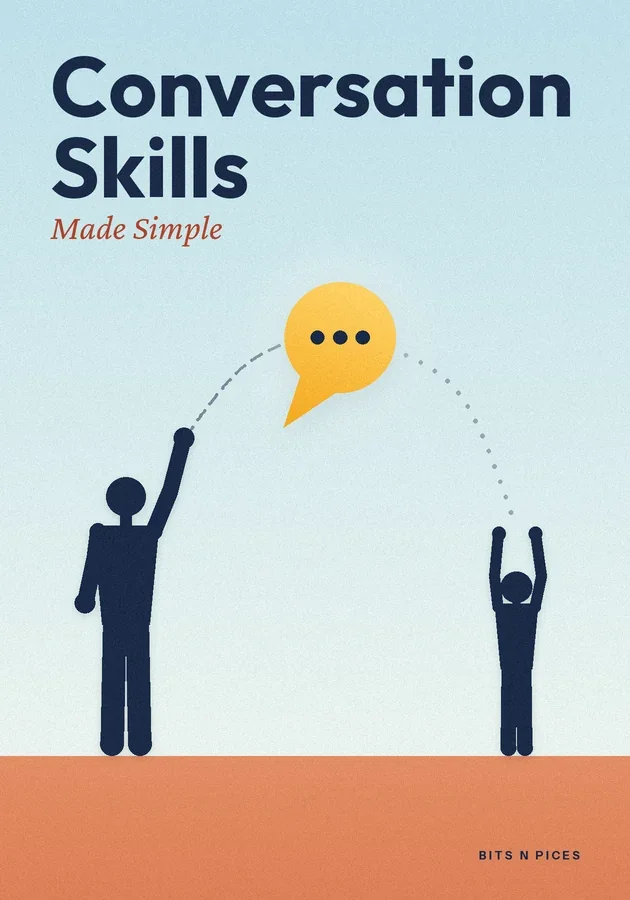
- Think of conversation as a game of catch: listen properly to what comes, throw something back, and never hold the ball too long.
- Children talk when an adult is nearby and not busy, so build small daily openings such as a question jar at dinner and quiet bedtime minutes.
- When someone is upset, let the cup empty before you pour: say tell me more, let them finish, and only then add your ideas.
- For harder topics, talk side by side while cooking, walking or mending something, so nobody feels stared at and pauses feel natural.
- When talk turns hot, use the traffic light: stop and breathe, name your feeling in one sentence, then solve the problem once everyone is calm.
このbitの内容
- Talking is a game of catch
If conversation feels complicated, picture a game of catch. One person throws: they say something.
- Four myths that make talking feel hard
Four myths make conversation feel harder than it is. Myth one: good talkers are born that way.
- The one habit that does most of the work
If you take only one habit from this book, take this one: let the cup empty before you pour. Picture someone who is upset as a cup filled to the brim with feeling.
- Side by side beats face to face
Sitting across from someone and saying we need to talk can feel like being under a spotlight. Many people, and most teenagers, talk more easily side by side, with something to do with their hands.
- When feelings run high, use a traffic light
Some conversations get hot fast: a fight between siblings, a disagreement with a partner, a meltdown over homework. A traffic light keeps things simple enough to remember when you are cross.
- Tiny daily habits for a talking family
You do not need a programme to raise children who talk. A few tiny habits, repeated, do most of it.
6つの方法で学ぶ
この本のために、Visualize、Mind Map、Practice、Scenario、Challenge、Reviewが用意されています。
クイズとフラッシュカード
読んだ内容をテストし、間隔反復で記憶に定着させましょう。
Bits AI
あなたが読んでいる本、セクション、クイズの質問について答えます。





