

重要なポイント
- Fill in a simple one-week family snapshot before changing anything, so your plan fixes the real gaps rather than the ones you guessed.
- A thirty-minute Sunday reset of five simple dinners, one shopping list and movement booked like appointments makes healthy weekdays need fewer decisions.
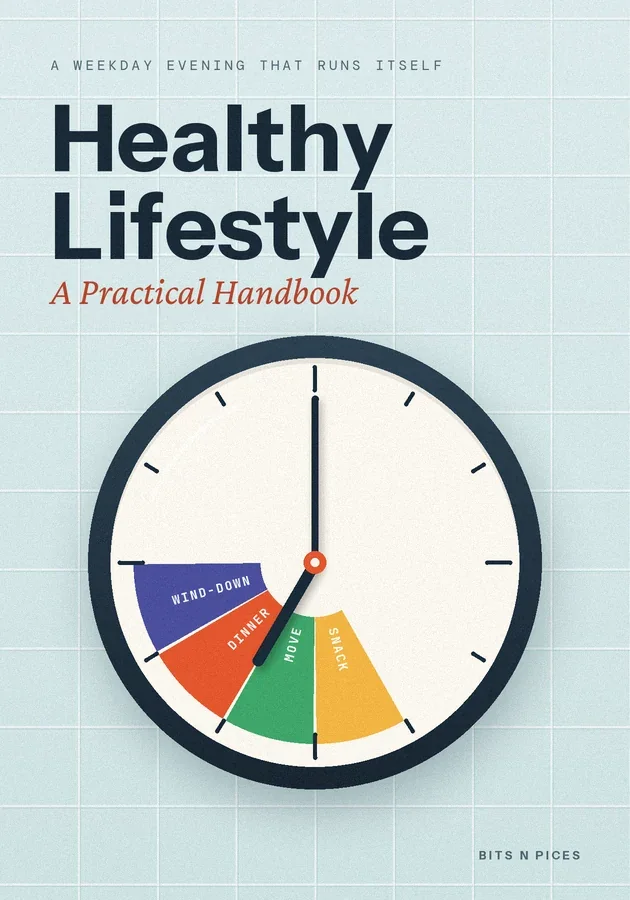
- Write your weekday evening as a running order on the fridge so snack, movement, dinner and wind-down happen in the same sequence every night.
- Talk with children about what food and movement help them do, never about weight or looks, and let them see you living it.
- Keep a minimum routine for bad weeks, review together monthly, and bring in a doctor, teacher or counsellor when a worry goes beyond everyday habits.
このbitの内容
- Map your family's real week first
Before planning anything, spend one ordinary week noticing how your family actually lives. Draw a grid on a sheet of paper with the days across the top and six rows down the side: wake time, bedtime, who moved, which meals were eaten together, evening screens, and a one-word note on energy or mood.
- The thirty-minute Sunday reset
Healthy weekdays are mostly decided on Sunday. The reset is five steps that take about half an hour.
- A weekday evening that runs itself
The hardest part of the day is the stretch between getting home and bedtime, when everyone is tired and every decision turns into a negotiation. The fix is a running order: the same sequence of steps every weekday evening, written on the fridge.
- Moving more without a gym or budget
Most national guidelines suggest adults build up to roughly two and a half hours of moderate activity across a week, the kind that warms you and makes talking slightly harder. Short bouts count, which is good news for busy parents.
- Talking with children about food and bodies
Children learn how to think about food and bodies mostly from the grown-ups around them, so the words used at home matter. The simplest rule is to talk about what food and movement help us do, not how anyone looks.
- Plan B for bad weeks, and getting help
Every family has weeks that fall apart: illness, exams, a late shift, a broken washing machine. Instead of abandoning the routine, switch to a minimum version agreed in advance.
6つの方法で学ぶ
この本のために、Visualize、Mind Map、Practice、Scenario、Challenge、Reviewが用意されています。
クイズとフラッシュカード
読んだ内容をテストし、間隔反復で記憶に定着させましょう。
Bits AI
あなたが読んでいる本、セクション、クイズの質問について答えます。





