

重要なポイント
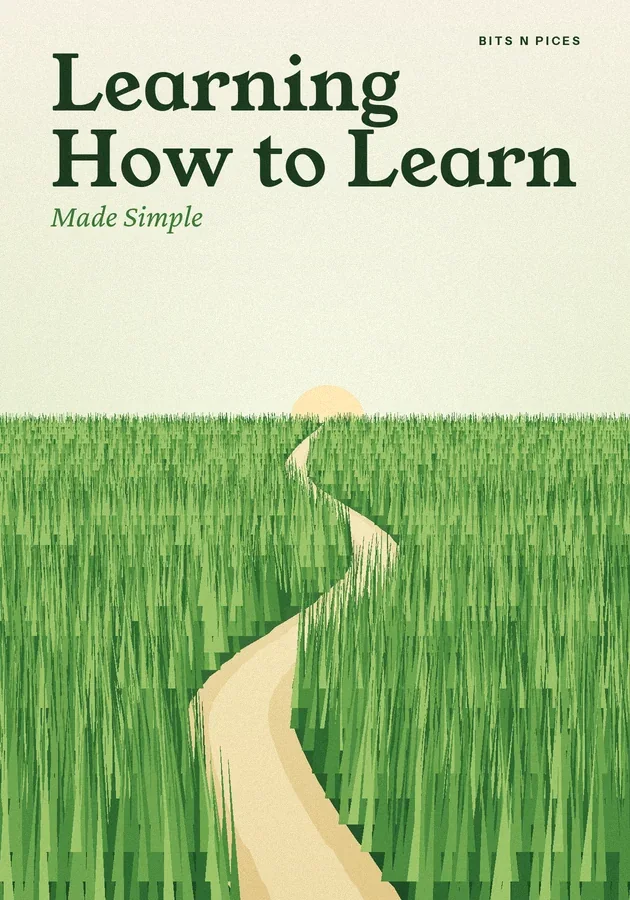
- Memory works like a path through long grass: each time your child pulls an answer from their own head, the path gets clearer and easier to find.
- Two habits do most of the work: close the book and say it back, and study a little on most days rather than a lot once.
- You can stop worrying about learning styles, long hours at the desk and being 'not a maths person'; none of them decides how well a child learns.
- Praise the method your child used rather than how clever they are, and answer 'I'm bad at this' with 'which part is tricky?'
- Children copy what they see, so let them watch you learn something new, get it wrong, test yourself and try again.
このbitの内容
- Memory is a path, not a bucket
Many of us grew up picturing the mind as a bucket: pour in enough reading and it fills up. A better picture is a field of long grass.
- Three myths you can stop worrying about
The first myth is that every child has one learning style, visual, auditory or hands-on, and must be taught only that way. Children do have preferences, but matching lessons to them makes little real difference.
- The two habits that do most of the work
If you change only two things at home, change these. The first is pull, not push.
- What to say when your child gets stuck
The words around homework shape how a child sees learning. Praise such as 'you're so clever' feels kind, but it quietly teaches that getting stuck means you are not clever after all.
- A family routine for busy evenings
Routines beat willpower, for children and adults alike. Pick the same time and the same spot on most days, so study starts without a debate.
- Measuring progress with a kinder yardstick
Progress in learning is lumpy. A child can practise for two weeks with nothing to show, then leap forward in a few days.
6つの方法で学ぶ
この本のために、Visualize、Mind Map、Practice、Scenario、Challenge、Reviewが用意されています。
クイズとフラッシュカード
読んだ内容をテストし、間隔反復で記憶に定着させましょう。
Bits AI
あなたが読んでいる本、セクション、クイズの質問について答えます。





