

重要なポイント
- Put any family decision on one sheet, with the claim on top and reasons and evidence beneath, and mark which reasons only work together.
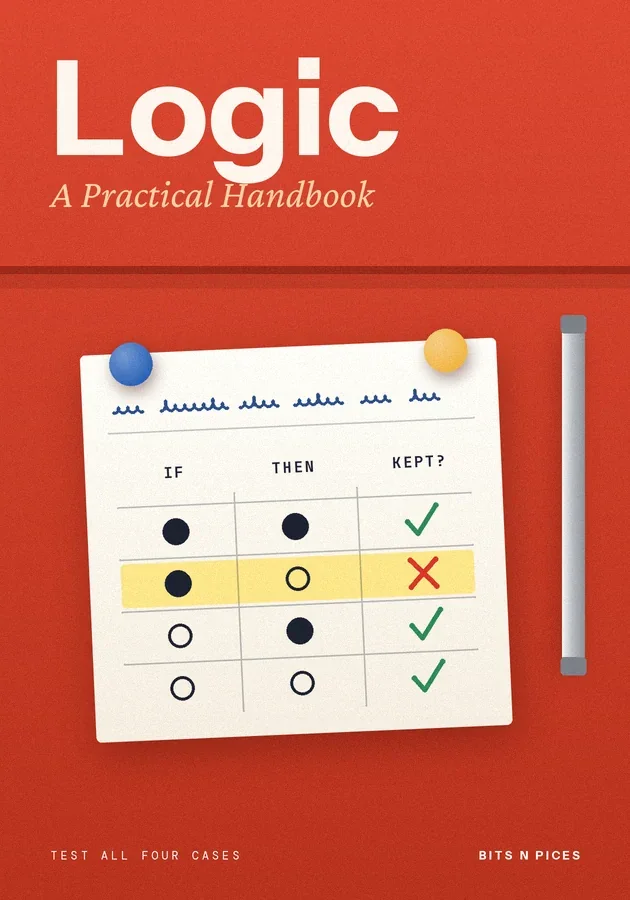
- Before a house rule goes on the fridge, test all four cases and choose if, only if or if and only if on purpose.
- Check a forward by asking what else you would expect to see if it were true, because missing expected evidence is evidence.
- An always or never claim falls to one counterexample, but a most or usually claim needs a count, so test each the right way.
- Name the move, never the person, and make whoever spots a bad argument offer the repaired version, adults included.
このbitの内容
- The one-sheet argument map
An argument map is a sheet of paper that shows how the reasons for a decision hang together. Write the claim in a box at the top.
- Writing house rules without loopholes
Children are natural lawyers, and loose if-then rules are their favourite material. If you finish your homework, you can watch the match promises the match to anyone who finishes; strictly, it says nothing about someone who has not.
- The five-question check for forwarded messages
Family chats carry a steady stream of urgent claims, and a forward costs nothing to share and something to believe. The check takes five questions and about three minutes.
- The counterexample hunt for always and never
Sweeping claims are cheap to make and cheap to test. The procedure has three steps.
- A dinner-table field guide to six moves
Six moves cover most of the bad arguments a family hears in a week. Attacking the person answers the speaker instead of the point.
- Debate night and the monthly rule review
Once a week, for twenty minutes, hold a debate night on a question that matters but does not hurt, such as whether to get a dog or whether homework comes before play. Everyone argues the side they disagree with first.
6つの方法で学ぶ
この本のために、Visualize、Mind Map、Practice、Scenario、Challenge、Reviewが用意されています。
クイズとフラッシュカード
読んだ内容をテストし、間隔反復で記憶に定着させましょう。
Bits AI
あなたが読んでいる本、セクション、クイズの質問について答えます。





