

重要なポイント
- Learning that feels easy, like rereading, mostly creates the illusion of knowing
- Pulling information out of memory strengthens it far more than putting it in again
- Space your practice and mix up topics, even though it feels slower and harder
- Struggling with a problem before you are taught the answer makes the lesson stick
- Test yourself to find out what you actually know, not what feels familiar
このbitの内容
- Why your study habits fool you
Picture a JEE aspirant on the night before a mock test. He rereads his chemistry notes for the fourth time, highlights half the page, and feels confident.
- Retrieval beats rereading
The single most useful idea in the book is retrieval practice. Every time you pull a fact or idea out of memory, you strengthen the path to it, and the harder the pull, the stronger the effect.
- Space it out and mix it up
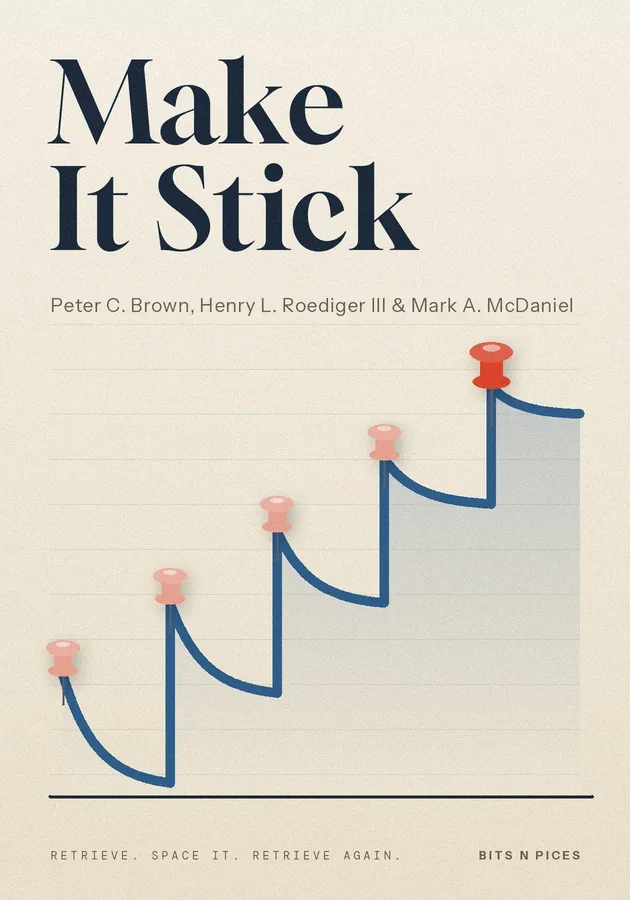
Massed practice, doing the same thing over and over in one sitting, produces fast gains and fast forgetting. Spacing the same practice across days lets some forgetting happen, so each return requires real effort to reconstruct.
- Struggle first, then learn
The authors describe several desirable difficulties, obstacles that slow you down now and pay off later. Generation is trying to answer a question or solve a problem before anyone shows you how.
- Calibrate what you really know
We are poor judges of our own knowledge. Text that reads smoothly feels learned.
- 実践に移す
This week, replace one rereading session with a retrieval session: close the book, write everything you remember, then check the gaps. Turn the headings of whatever you are studying into questions and keep them as flashcards you answer before flipping.
6つの方法で学ぶ
この本のために、Visualize、Mind Map、Practice、Scenario、Challenge、Reviewが用意されています。
音声読み上げ
MichaelまたはBellaによるこのbitの朗読を聴きましょう。
クイズとフラッシュカード
読んだ内容をテストし、間隔反復で記憶に定着させましょう。
Bits AI
あなたが読んでいる本、セクション、クイズの質問について答えます。





