

重要なポイント
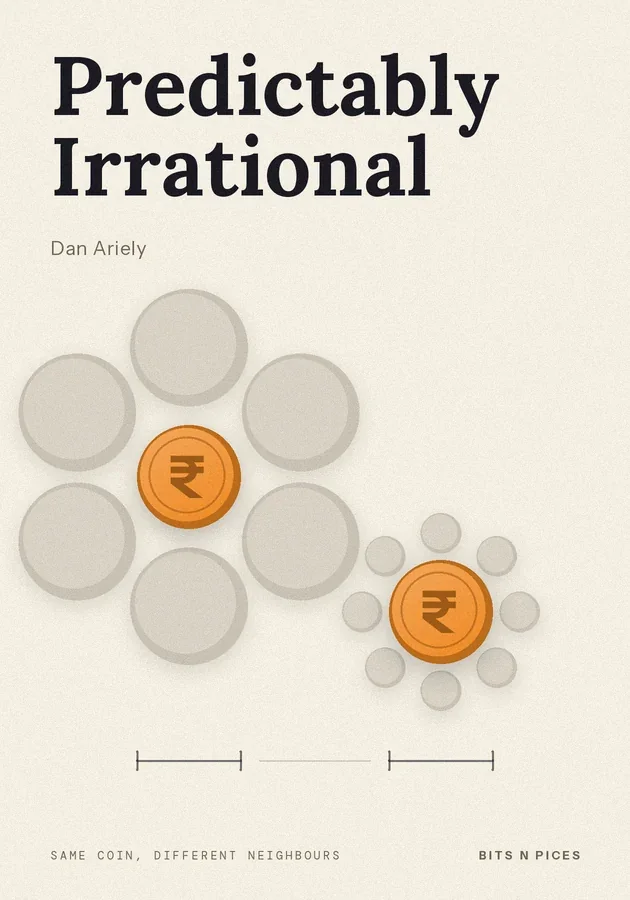
- We rarely know what something is worth; we judge by comparison to nearby options
- The first number you see anchors every price you accept afterwards
- Free is not just a low price; it switches off our rational comparison
- Mixing money into a friendly favour can quietly ruin the relationship
- Owning something makes you overvalue it, so set your price before you buy
このbitの内容
- Irrational, but in predictable ways
Standard economics assumes you weigh costs and benefits and pick the best option. Dan Ariely, a behavioural economist who spent years in hospital after a severe burn injury, became fascinated by how far real decisions drift from that picture.
- Everything is relative
We do not have an internal meter for value. We decide by comparing, and the comparison can be rigged.
- The strange power of free
Cut the price of a premium chocolate from fifteen cents to fourteen and the cheap one from one cent to zero, and buyers stampede to the cheap one, even though the gap has not changed. Ariely argues that free is an emotional trigger, not a price.
- Why we cling to what we own
Ariely and colleagues studied students who won scarce basketball tickets in a lottery. Those without tickets would pay about 170 dollars; those who held them refused to sell for less than about 2,400.
- Expectations, deadlines and small cheats
Tell people a beer has vinegar in it and they hate it; let them taste first and they enjoy it. Expectations shape experience so strongly that a painkiller works better when it is expensive.
- 実践に移す
This week, before any purchase over a few thousand rupees, decide what you would pay before you see the listed price, so the anchor is yours and not the seller's. When a deal is labelled free, ask what it is costing you in time or extra spending.
6つの方法で学ぶ
この本のために、Visualize、Mind Map、Practice、Scenario、Challenge、Reviewが用意されています。
音声読み上げ
MichaelまたはBellaによるこのbitの朗読を聴きましょう。
クイズとフラッシュカード
読んだ内容をテストし、間隔反復で記憶に定着させましょう。
Bits AI
あなたが読んでいる本、セクション、クイズの質問について答えます。





