重要なポイント
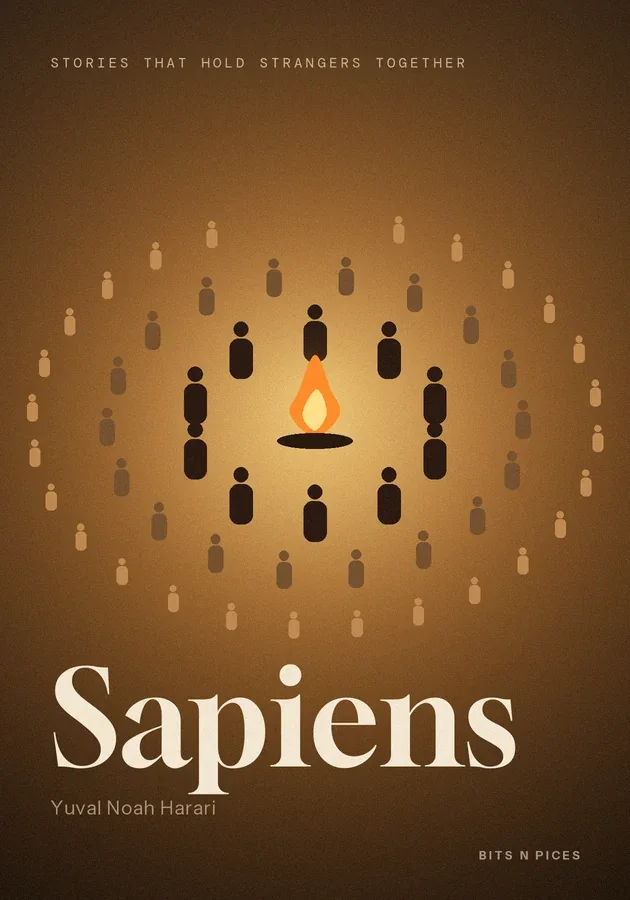
- Shared fictions — money, nations, companies — let strangers cooperate at scale
- The agricultural revolution traded individual wellbeing for collective power
- Money is the most universal system of mutual trust ever devised
- Science's engine is the admission of ignorance
このbitの内容
- The cognitive revolution
Around 70,000 years ago, Homo sapiens developed language flexible enough to describe things that don't exist — myths, gods, tribes, brands. This is Harari's central insight: shared fictions allow millions of strangers to cooperate.
- History's biggest fraud
Harari provocatively calls the agricultural revolution history's biggest fraud. Wheat domesticated us: farmers worked longer hours than foragers, ate worse diets, caught new diseases and lived in fear of drought — while population exploded.
- The unification of humankind
Three universal orders slowly stitched all humans into one world: money, empires and religions. Money deserves special awe — it is the only trust system that bridges any culture: people who worship different gods and hate each other's politics will still accept the same coin.
- The scientific revolution
Modern science began with a radical confession: we do not know. Pre-modern traditions claimed all important answers already existed in scripture; science institutionalized ignorance and married it to empire and capital — expeditions funded in hope of returns, discoveries feeding conquest and commerce.
6つの方法で学ぶ
この本のために、Visualize、Mind Map、Practice、Scenario、Challenge、Reviewが用意されています。
音声読み上げ
MichaelまたはBellaによるこのbitの朗読を聴きましょう。
クイズとフラッシュカード
読んだ内容をテストし、間隔反復で記憶に定着させましょう。
Bits AI
あなたが読んでいる本、セクション、クイズの質問について答えます。