

重要なポイント
- Start by measuring, not fixing: two weeks of a simple morning sleep diary shows your real pattern and turns vague worry into a problem you can work on.
- Anchor the morning first: a fixed wake time and daylight soon after waking set the body clock that decides when sleep can arrive at night.
- After a bad night, protect the next one: keep your usual wake time, skip the long nap, and let sleep pressure build instead of compensating.
- If you have been awake in bed for what feels like twenty minutes, get up, do something dull in dim light, and return when sleepy.
- Confidence means reading your own data with judgement: trust how you function by day over any tracker score, and see a doctor when warning signs appear.
このbitの内容
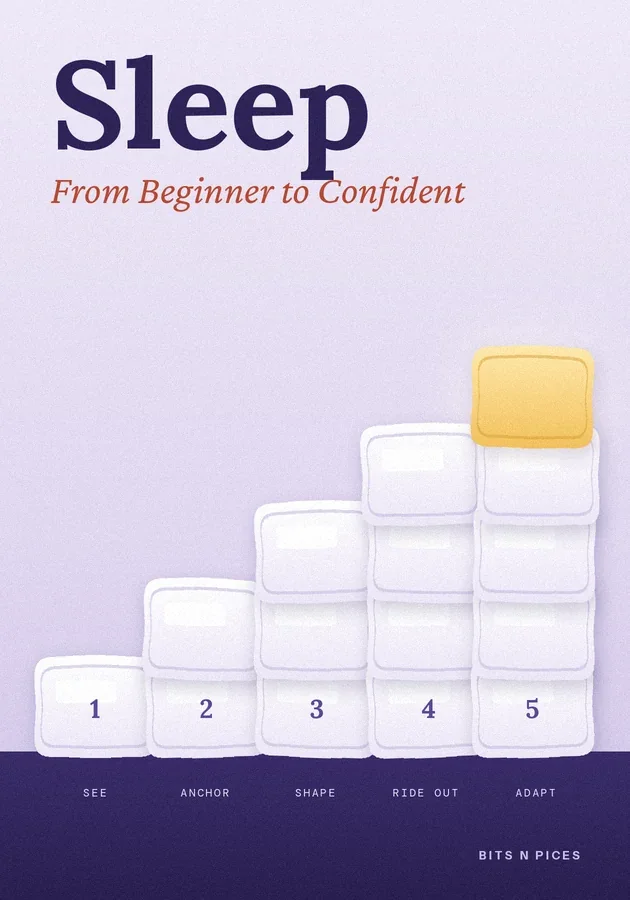
- Rung one: see your sleep as it is
Every climb starts with an honest reading of where you are. Two forces time your sleep.
- Rung two: anchor the clock from the morning
Most people try to fix sleep from the bedtime end, the end they control least. You cannot order yourself to fall asleep, but you can decide when you get up.
- Rung three: shape the evening, not just bedtime
With the clock anchored, the third rung works on the hours before bed, where most everyday levers sit. Caffeine blocks the chemical signal behind sleep pressure, and a common estimate is that about half of it is still active five or six hours later, so an afternoon coffee can blunt a full tank at eleven.
- Rung four: ride out a bad night without compensating
Everyone has bad nights; the skill is stopping one from becoming a run of them. Two mechanisms do the damage.
- Rung five: adapt when life breaks the routine
The fifth rung is keeping sleep workable when travel, shifts, deadlines, illness or a new baby break the routine. The principle: protect an anchor and use light on purpose.
- Confident: judgement, data and knowing your limits
The top of the ladder is not perfect sleep; it is judgement. One useful figure is sleep efficiency, the share of time in bed actually spent asleep.
6つの方法で学ぶ
この本のために、Visualize、Mind Map、Practice、Scenario、Challenge、Reviewが用意されています。
クイズとフラッシュカード
読んだ内容をテストし、間隔反復で記憶に定着させましょう。
Bits AI
あなたが読んでいる本、セクション、クイズの質問について答えます。





