

重要なポイント
- A startup is an experiment in extreme uncertainty, so treat every plan as a hypothesis
- 最大のリスクを検証する最小のものを作り、実際の行動を測定する
- スタートアップの前進を測る真の指標は、実装した機能ではなく検証された学び
- 総登録数のような見せかけの数字ではなく、コホートやABテストで成長を判断する
- ピボットか継続かを定期的に判断し、ためらわずに方向転換する
このbitの内容
- Startups are experiments, not plans
Picture two founders in a Bengaluru co-working space. They spend 8 months building a polished app in secret, launch it, and hear silence.
- Build, measure, learn in tight loops
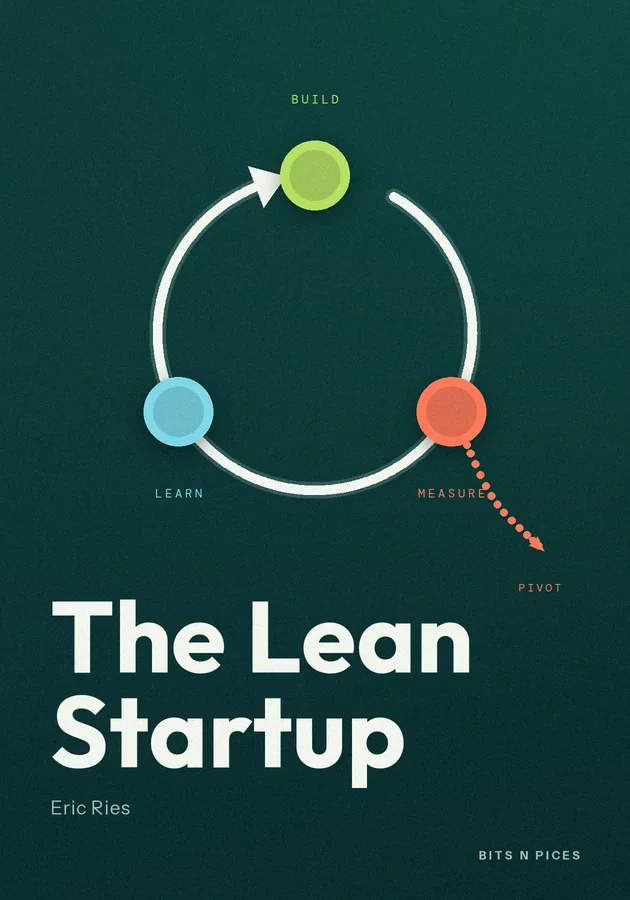
The engine of the book is a loop. You build something small, measure how real people respond, learn from the data, and go around again.
- The minimum viable product
The minimum viable product, or MVP, is the smallest thing you can put in front of real users that tests your most important assumption. It is not a cheap, broken version of the final product; it is a targeted experiment.
- Vanity metrics versus real learning
Total signups keep going up. Page views keep climbing.
- Pivot or persevere
At some point the data stops improving. The loop runs, the numbers barely move, and the team keeps hoping the next feature will fix it.
- 実践に移す
Start by writing down the single riskiest assumption behind whatever you are building, the one that would sink the idea if it were wrong. Then design the cheapest possible test of that assumption, whether that is a landing page, a WhatsApp poll, a manual version of the service, or 10 honest conversations with potential customers.
6つの方法で学ぶ
この本のために、Visualize、Mind Map、Practice、Scenario、Challenge、Reviewが用意されています。
音声読み上げ
MichaelまたはBellaによるこのbitの朗読を聴きましょう。
クイズとフラッシュカード
読んだ内容をテストし、間隔反復で記憶に定着させましょう。
Bits AI
あなたが読んでいる本、セクション、クイズの質問について答えます。





