

重要なポイント
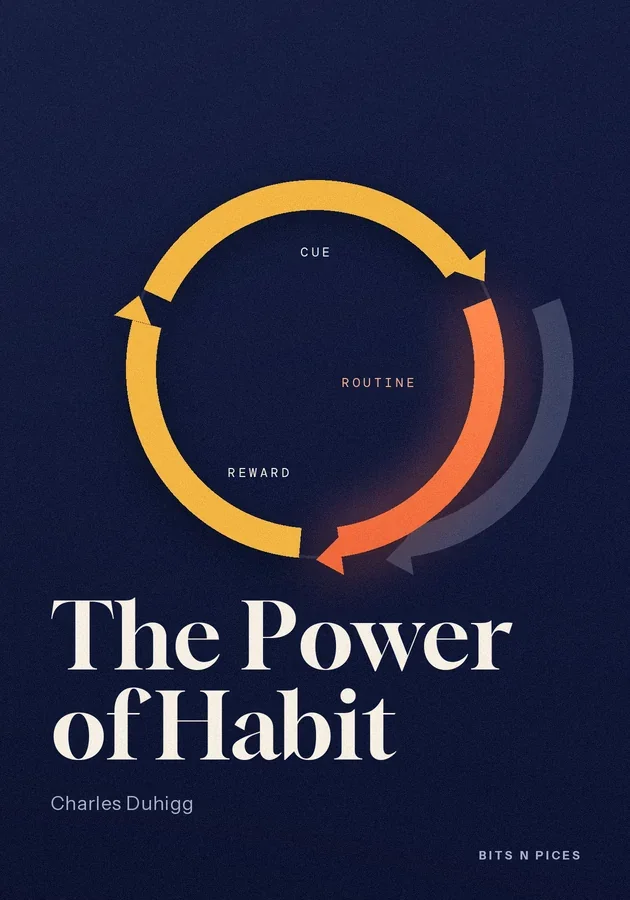
- Every habit runs on a loop of cue, routine and reward that the brain automates
- Craving for the reward is what makes a habit stick or fall apart
- Keep the cue and reward but swap the routine to change a habit
- Keystone habits like exercise or family dinners start chain reactions across your life
- Willpower works like a muscle: it tires, it strengthens and planning saves it
このbitの内容
- Your brain runs on loops
Think about the last time you drove or walked a familiar route and arrived with no memory of the journey. Your brain had handed the job over to a habit.
- Cue, routine, reward and craving
Every habit, Duhigg argues, has three parts. A cue triggers it: a time, a place, a feeling, a person or a previous action.
- Swap the routine, keep the rest
You cannot easily delete a habit, but you can rewrite it. Duhigg calls this the golden rule of habit change: keep the old cue and the old reward, and insert a new routine between them.
- Keystone habits and willpower
Some habits matter far more than others because they set off chain reactions. Duhigg calls these keystone habits.
- Habits of companies and crowds
Organisations have habits too, and they are mostly unwritten. Duhigg describes a hospital where nurses had a habit of not questioning surgeons, until a series of avoidable mistakes forced a change, and a rail station fire that spread because no department felt responsible for the gap between them.
- 実践に移す
Pick one habit you want to change and, for 3 days, write down the cue each time it fires: the time, place, mood, people and what you did just before. Then test rewards.
6つの方法で学ぶ
この本のために、Visualize、Mind Map、Practice、Scenario、Challenge、Reviewが用意されています。
音声読み上げ
MichaelまたはBellaによるこのbitの朗読を聴きましょう。
クイズとフラッシュカード
読んだ内容をテストし、間隔反復で記憶に定着させましょう。
Bits AI
あなたが読んでいる本、セクション、クイズの質問について答えます。





