

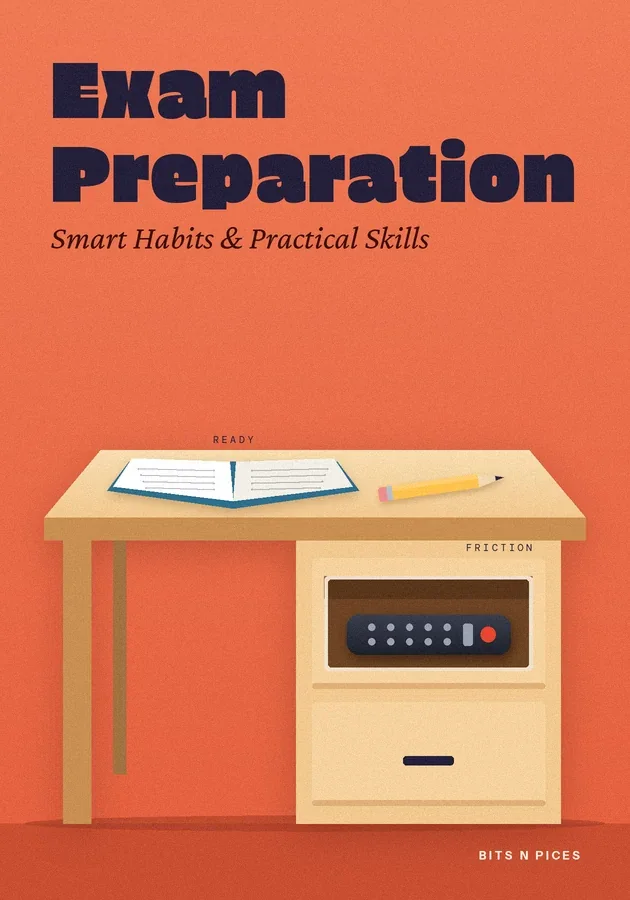
Exam Preparation: Smart Habits & Practical Skills
Главные выводы
- Every study habit has a cue, a routine and a reward, so when a routine will not stick, check which of the three is missing.
- Link study to something your child already does every day with an anchor sentence, such as: after I finish my snack, I will open my book.
- Remove friction from studying by preparing the night before, and add friction to distractions, such as keeping the television remote in a drawer.
- Track whether the routine happened with a simple tick chart, and praise the effort you noticed rather than the marks that followed.
- Agree a five-minute version for hard days, restart the day after any miss, and keep a small learning habit of your own beside your child.
Внутри этого бита
- What a study habit really is
A habit is an action you repeat in the same situation until it starts with very little thought, like brushing your teeth after breakfast. Every habit has three parts.
- Cues that make study start by itself
The strongest cue is something that already happens every day. Link study to it with an anchor sentence: after I do this, I will do that.
- Friction: make good choices easy, distractions harder
Friction is the small effort that stands between you and an action. A few seconds of extra effort can decide whether something happens at all, which makes friction one of the simplest tools a family has.
- Small tools that hold a routine together
A habit needs a few simple tools, and none of them costs anything. The first is the study box: any old container holding pens, a ruler, blank cards and the week's list, kept where the routine happens.
- Tracking that encourages instead of pressuring
Tracking means recording whether a habit happened, so progress becomes visible. For a family, the best tracker is often a sheet on the fridge with the days of the week and one row: did the routine happen today?
- Keeping the routine alive when life wobbles
Every routine wobbles: school trips, illness, festivals, visitors, exam weeks with odd timetables. Plan for this in advance by agreeing a five-minute version of the habit, such as ten question cards, for tired or busy days.
Изучайте шестью способами
Для этой книги доступны режимы: Визуализация, Интеллект-карта, Практика, Сценарий, Вызов и Повторение.
Тесты и карточки
Проверяйте прочитанное и запоминайте с помощью интервального повторения.
Bits AI
Отвечает на вопросы о книге, разделе или вопросе теста, который вы сейчас проходите.





