

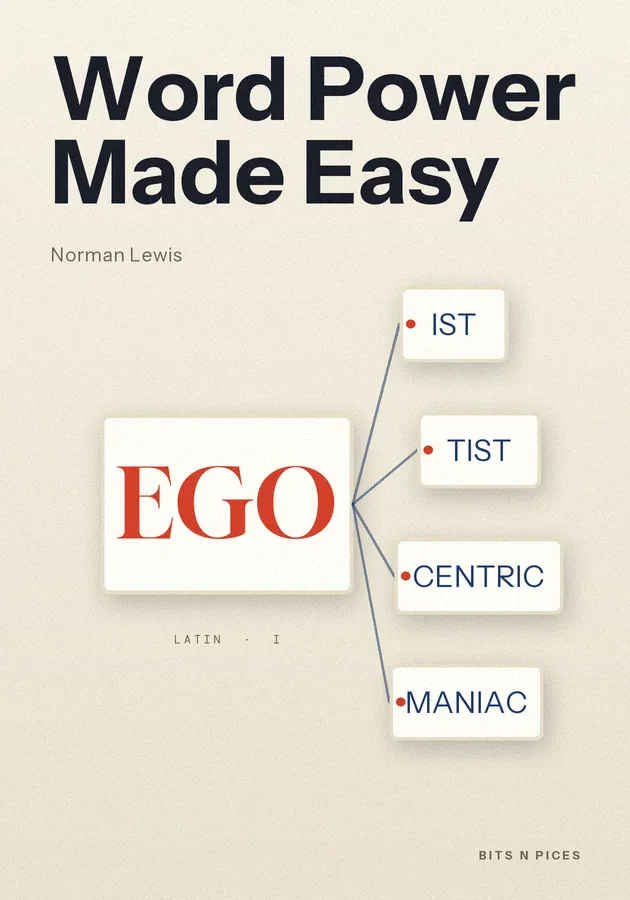
Word Power Made Easy
Главные выводы
- Vocabulary growth stalls in adulthood only because we stop being curious about words
- Learn words through their Greek and Latin roots so each new root unlocks many words
- Study words in clusters of related ideas, not in random alphabetical lists
- Short daily sessions with frequent self-tests beat long occasional cramming
- Use a new word in speech or writing within a day so it becomes yours
Внутри этого бита
- Words are ideas you can own
Why do children learn thousands of new words a year while most adults barely add a handful? Norman Lewis, an American teacher who wrote this book in 1949, argues that the slowdown is not about age or ability.
- Roots unlock whole word families
The heart of Lewis's method is etymology, the study of where words come from. Most hard English words are built from a few hundred Greek and Latin pieces, so one root can unlock 10 words.
- Learn words in idea clusters
Lewis never gives you an alphabetical list. Instead, each session begins with an idea and gathers the words that live around it.
- Test, review, and say them aloud
The book is designed to be worked through, not read. Every session ends in a batch of quick tests, and the answers are right there so you can check yourself immediately.
- Make new words part of you
A word you have merely read is still a stranger. Lewis wants each one to become a habit, and that requires deliberate use.
- Put it to work
Pick a fixed 15-minute slot each day, perhaps on the morning commute, and give it entirely to words. Start with one root a day, such as the Greek piece meaning fear or the Latin piece meaning to speak, and list every word you already know that contains it, then add 2 or 3 new ones.
Изучайте шестью способами
Для этой книги доступны режимы: Визуализация, Интеллект-карта, Практика, Сценарий, Вызов и Повторение.
Озвучено
Слушайте этот бит в озвучке от Michael или Bella.
Тесты и карточки
Проверяйте прочитанное и запоминайте с помощью интервального повторения.
Bits AI
Отвечает на вопросы о книге, разделе или вопросе теста, который вы сейчас проходите.





