Decision Making: Smart Habits & Practical Skills
Önemli çıkarımlar
- Turn the household's repeat decisions into standing rules with an exception clause and a review date, so evenings stop being a string of negotiations.
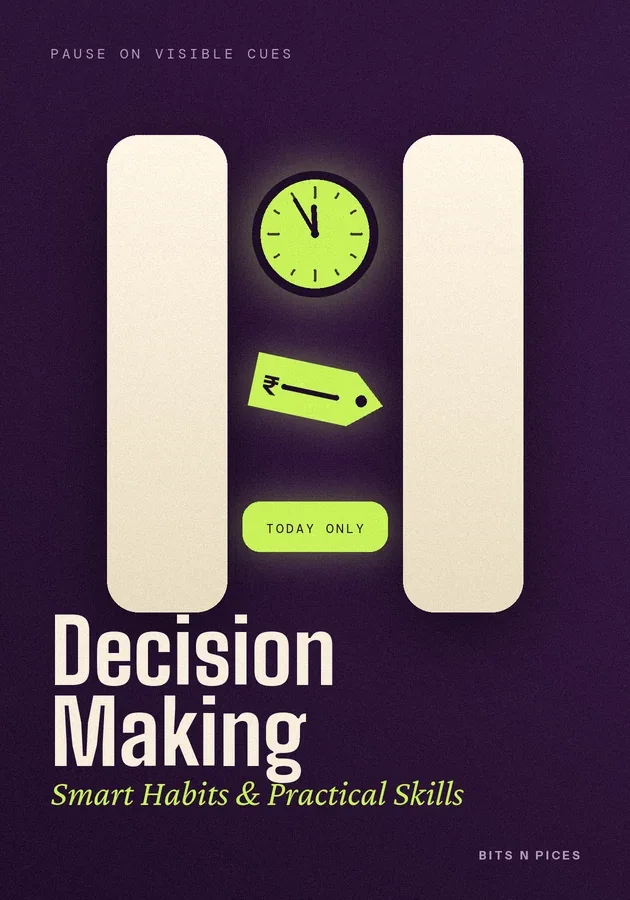
- Write pause cues tied to things you can spot in the moment, such as the clock, a price or a seller saying today only.
- Add friction to rash, costly or irreversible moves and remove it from wise ones, agreeing any friction for children with them first.
- Give each family decision a clear rung, from parent decides to child decides, and move it up as your child shows judgement.
- Keep pending family decisions on a visible board with an owner and a date, and judge past choices by the reasoning used, not the result.
Bu bit'in içinde
- Decide once so evenings stop being negotiations
A household makes hundreds of small decisions a week, and most of them are the same decisions again: what is for dinner, when screens go off, who showers first, whether a friend can visit on a school night. Each one made fresh costs attention and often an argument.
- Pause cues for the moments that go wrong
Some moments reliably produce poor decisions: late at night, mid-argument, under a seller's pressure, when you are hungry or being watched. A pause cue is an if-then rule that holds the decision until a better moment.
- Friction that slows rash choices, not wise ones
Behaviour follows the easiest path, so arrange the path. Friction is anything that adds a step, a wait or a question before an action.
- Handing decisions to children one rung at a time
Children become good deciders by deciding, but not all at once. A decision-rights ladder makes the handover explicit.
- The decision board and the weekly review
Habits decay unless something maintains them, and a household needs one visible place where decisions live. A decision board is a whiteboard or sheet by the door with three columns: waiting, decided and review on.
- When the system drifts, breaks or backfires
Every household system eventually meets a month it cannot handle: an illness, a move, exams, a new baby. Plan a crisis version in advance, a few standing rules and one pause cue, and park every non-urgent decision in the waiting column until life is calmer.
Altı farklı yolla öğren
Görselleştir, Zihin Haritası, Pratik, Senaryo, Meydan Okuma ve Tekrar, bu kitap için yazıldı.
Test ve bilgi kartları
Okuduklarını test et ve aralıklı tekrar ile aklında tut.
Bits AI
Kitap, bölüm ve o an üzerinde olduğun test sorusu hakkında cevaplar verir.