

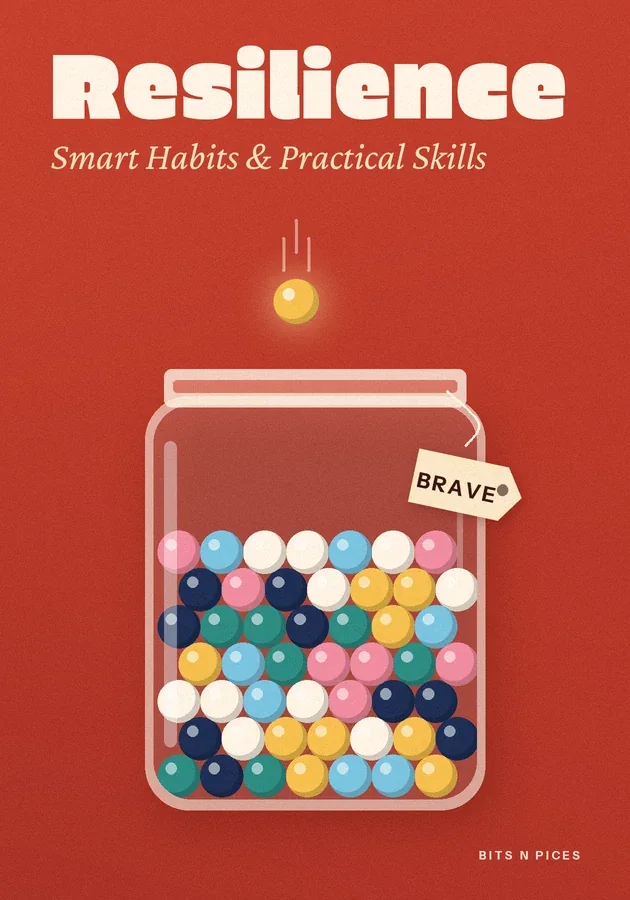
Resilience: Smart Habits & Practical Skills
Önemli çıkarımlar
- Children learn resilience mostly from the routines they live inside and the recoveries they watch, so design family habits rather than delivering pep talks.
- Attach each resilience habit to a moment your family already shares, such as the school run, dinner or bedtime, so the cue does the remembering.
- Add friction to the reactions you regret, such as replying in anger, and remove friction from the responses you want, such as reaching a calm corner.
- Stack one small daily brave thing onto an existing routine, sized to feel nervous but doable on a bad day, and let children choose their own.
- Track actions in a shared brave jar rather than scoring moods, and after any missed day make sure the habit happens the next day, however small.
Bu bit'in içinde
- Why routines teach more than speeches
Most parents already know the ideas behind resilience: setbacks are normal, feelings pass, effort grows ability. The difficulty is that children rarely absorb ideas from a talk given at the wrong moment.
- Cues that spark a steadier response
A habit has three parts: a cue that starts it, a routine you carry out and a reward that makes it worth repeating. Family resilience habits fail most often at the cue.
- Friction for the reactions you regret
Friction is anything that makes a behaviour slightly harder, and you can use it on purpose. Most parents have one or two reactions they regret, such as shouting when a child dawdles in the morning or firing off a sharp reply to the class group chat.
- Stacking small stretches into the day
Resilience grows when people meet manageable difficulty often, not when they are protected from all of it. A family habit can build that on purpose.
- Tracking without turning it into homework
Tracking keeps a routine visible, but in families it easily backfires. A chart that scores a child's moods or rewards 'not crying' teaches performance, not resilience.
- Restarting when a family habit breaks
Every routine eventually breaks, usually during exam month, a house move, an illness or a visit from relatives. Missing one day is ordinary.
Altı farklı yolla öğren
Görselleştir, Zihin Haritası, Pratik, Senaryo, Meydan Okuma ve Tekrar, bu kitap için yazıldı.
Test ve bilgi kartları
Okuduklarını test et ve aralıklı tekrar ile aklında tut.
Bits AI
Kitap, bölüm ve o an üzerinde olduğun test sorusu hakkında cevaplar verir.





