

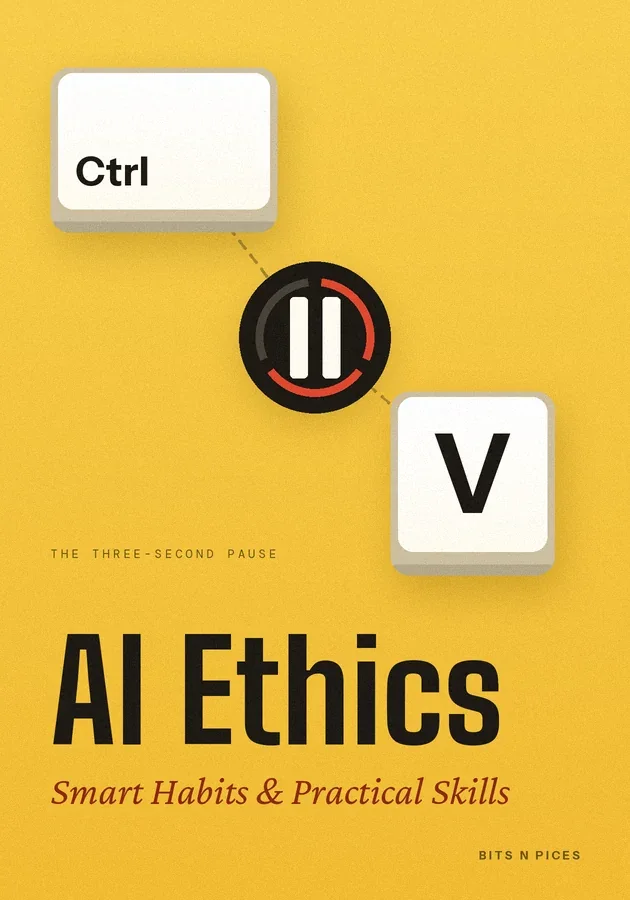
AI Ethics: Smart Habits & Practical Skills
Những bài học chính
- Ethical AI use at home is a set of small routines, not a set of opinions, so design cues and defaults instead of relying on willpower.
- Attach a three-second pause before every paste and every share: is this mine to give, and would I say it out loud?
- Children copy what they see, so let them watch you check an AI answer against a second source before you act on it.
- A weekly ten-minute family review of what the tools did well and badly keeps the habit alive and turns mistakes into shared lessons.
- Friction is a tool: keep AI apps off the home screen, off shared accounts and out of bedrooms, and the good habits mostly run themselves.
Bên trong bit này
- Why ethics needs a routine, not a lecture
Most parents already hold sensible views about AI: do not cheat, do not share private things, do not believe everything a screen says. The trouble is that views do not fire at nine at night when a tired twelve-year-old has a project due and a chatbot open.
- Four values, four cues you can see
Keep the values few enough to remember. Honesty means you say when a machine helped.
- Designing the paste pause
The single most useful habit is a short pause between deciding to use an AI tool and pressing enter. Three seconds is enough to catch the worst mistakes: a friend's photo, a medical report, a password, a whole essay that was supposed to be original.
- Checking as a family sport
Children believe confident sentences, and AI tools produce nothing else. The habit that protects them is checking against a second source, and they will only do it if they have seen you do it and enjoy it.
- Friction, defaults and where the tools live
Habits are shaped by how easy the surrounding environment makes each choice. If an AI app sits on the home screen of a phone that goes to bed with the child, the paste-first habit wins.
- Keeping it going and your own example
Every habit fades unless it has a review loop. Ten minutes on a Sunday is enough.
Học theo sáu cách
Trực quan hoá, Sơ đồ tư duy, Thực hành, Tình huống, Thử thách và Ôn tập được viết riêng cho cuốn sách này.
Trắc nghiệm và flashcard
Kiểm tra những gì bạn đã đọc và ghi nhớ lâu hơn với lặp lại ngắt quãng.
Bits AI
Trợ lý này trả lời dựa trên cuốn sách, phần học, hay câu trắc nghiệm mà bạn đang làm.





