

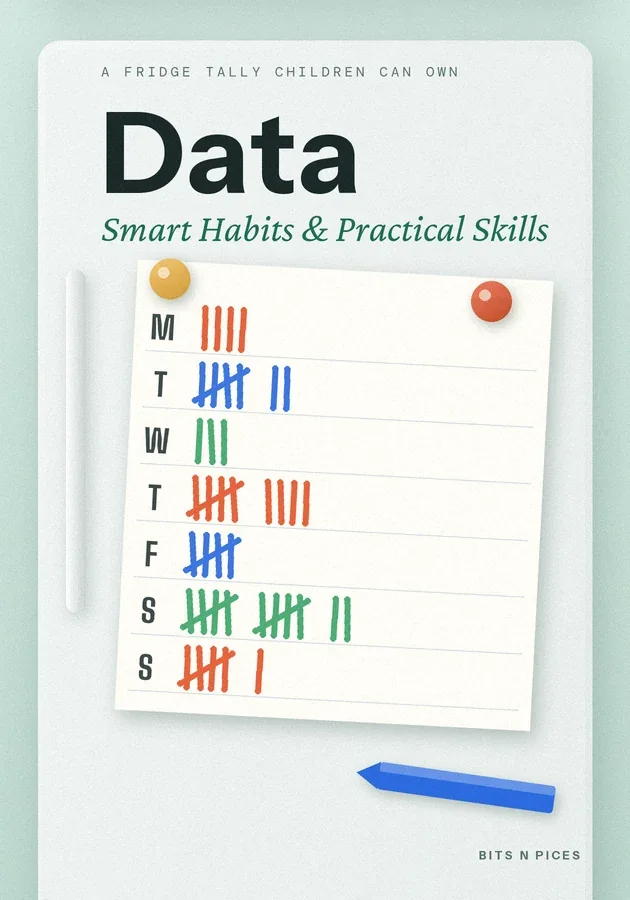
Data: Smart Habits & Practical Skills
Những bài học chính
- Tie each family data habit to a cue you already have, such as Saturday breakfast, so it happens without anyone needing to remember it.
- Give every family document one home and one naming pattern, date then what then who, and file papers on the day they arrive.
- Keep at least two copies of important family files in two different places, and check the backup on the same day each month.
- Let children own a visible piece of the tracking, such as marking the fridge tally, and keep it a family total rather than a contest.
- When a routine breaks, restart at the very next cue with the smallest version instead of waiting for a perfect fresh start.
Bên trong bit này
- Why data habits start at the kitchen table
Data is any information that has been recorded: a school fee receipt, a meter reading, a photo of a birth certificate, the password to a learning app. Every family produces a steady stream of it, and most families handle it in bursts of panic.
- The weekly family numbers minute
The easiest family data habit is a weekly reading of one number that matters to the household. The electricity meter is ideal: it is at home, it changes every week, and reading it takes a minute.
- A fridge tally children can own
Tracking becomes meaningful to children when they do it themselves. A tally is the simplest tracker there is: one mark for each time something happens, grouped in fives so it is easy to count.
- Naming, folders and the one-place rule
Most lost documents are not really lost; they are saved somewhere nobody would think to look. Two habits solve this.
- Backups and passwords without the panic
A backup is a second copy of a file kept in a different place, so that if one copy is lost the other survives. Phones break, get stolen and fall into buckets of water.
- Keeping the habits going as children grow
Every routine breaks sometimes. Holidays, exams, illness and visiting relatives all interrupt the Saturday reading or the monthly backup check.
Học theo sáu cách
Trực quan hoá, Sơ đồ tư duy, Thực hành, Tình huống, Thử thách và Ôn tập được viết riêng cho cuốn sách này.
Trắc nghiệm và flashcard
Kiểm tra những gì bạn đã đọc và ghi nhớ lâu hơn với lặp lại ngắt quãng.
Bits AI
Trợ lý này trả lời dựa trên cuốn sách, phần học, hay câu trắc nghiệm mà bạn đang làm.





