

Debt Management: Skills for the Future
Những bài học chính
- Your children will meet credit that is faster, more personalised and more embedded than yours, so the pause before borrowing is the first skill to teach.
- Judge every offer by its total cost over its whole life, not the monthly figure, and let your children watch you do the sums out loud.
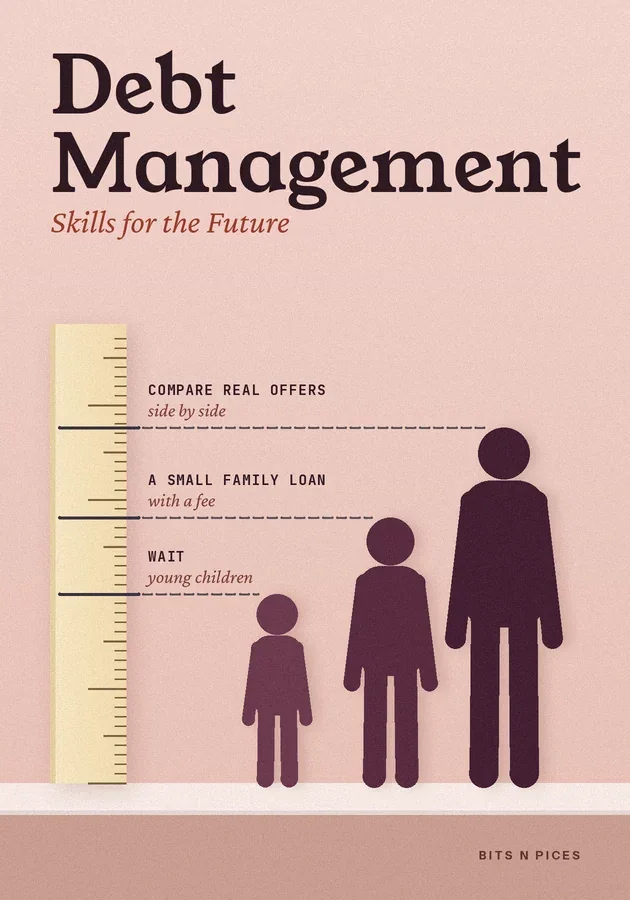
- Teach borrowing by age: waiting for young children, a small family loan with a fee for older ones, and real offers compared side by side with teenagers.
- Check your own credit report once a year, dispute errors in writing with proof, and explain to teenagers that data they share shapes the offers they receive.
- Agree a family rule that any urgent money request is checked with another family member, through a number you already have, before anyone pays.
Bên trong bit này
- How credit is changing around our children
The borrowing your children meet as adults will differ from the loans you took. Credit is moving inside the checkout, the phone and the subscription, so borrowing is becoming a tap rather than a decision.
- Five skills that outlast any app
Products will change names and screens many times before your child turns twenty-five, so the skills worth building are the ones that work on any product. The first is reading total cost: every payment, fee and charge added up over the life of the deal.
- Teaching the cost of borrowing by age
Children cannot learn about interest from a lecture, but they can feel it. Under about eight, the lesson is waiting.
- Your credit record in a data-driven world
More of life's big steps, renting a flat, taking a loan and sometimes even starting a job, will touch a credit record. That record is the history of your borrowing and repayments held by credit bureaus, and lenders turn it into a score.
- Guarding the family against new debt traps
Each new technology brings new ways to push people into payments they do not owe. Cloned voices and convincing messages can imitate a relative in trouble or a lender demanding urgent repayment.
- A ten-year family plan for debt
The future rewards households that have their own debt under control before children leave home. Start with your position: list every debt, clear the most expensive first and build a buffer so shocks do not become loans.
Học theo sáu cách
Trực quan hoá, Sơ đồ tư duy, Thực hành, Tình huống, Thử thách và Ôn tập được viết riêng cho cuốn sách này.
Trắc nghiệm và flashcard
Kiểm tra những gì bạn đã đọc và ghi nhớ lâu hơn với lặp lại ngắt quãng.
Bits AI
Trợ lý này trả lời dựa trên cuốn sách, phần học, hay câu trắc nghiệm mà bạn đang làm.





