

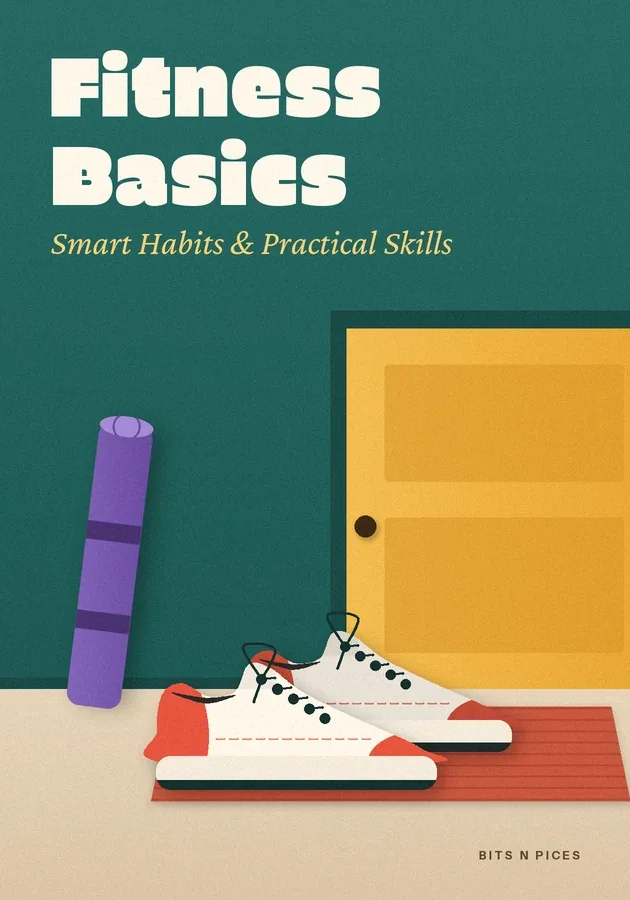
Fitness Basics: Smart Habits & Practical Skills
Những bài học chính
- Tie your movement to a cue that already happens every day, such as the school drop-off or clearing the dinner plates, instead of relying on willpower.
- Write if-then plans for your usual obstacles, such as if it rains, then I do the stair circuit, so the decision is made before the tired moment.
- Make the active choice the easy one at home: shoes by the door, a mat left out, bikes within reach, and the phone charging outside the bedroom.
- Track what the family did, such as ticks on a shared calendar, never weights or comparisons between children, and review it together for ten minutes each week.
- Plan hard seasons in advance by shrinking the habit rather than dropping it, and expect a new routine to take a couple of months to feel automatic.
Bên trong bit này
- Why busy families need systems, not willpower
A habit is a behaviour that starts almost automatically when a familiar cue appears in a familiar place. That matters for parents, because by evening most of the day's willpower has gone on lunch boxes, homework and work messages.
- Anchoring movement to the day you already have
The strongest cues are routines that already happen every day without fail. Habit stacking attaches a new action to one of them: after I pour my morning tea, I do five minutes of squats and counter push-ups while it cools.
- Friction: making the active choice the easy one
Friction is any small effort that stands between you and an action. It sounds trivial, but a few seconds of hunting for shoes or unrolling a mat is often enough to tip a tired parent towards the sofa.
- Designing a routine the whole family owns
Children rarely adopt routines because they are told to; they absorb the ones their household simply has. A family routine works best with a fixed slot, a little choice and no scorekeeping.
- Tracking that helps rather than pressures
Tracking works because it makes an invisible habit visible, and a chain of ticks becomes something nobody wants to break. The intermediate skill is choosing what to track.
- Keeping it going through hard seasons
New routines take longer to settle than most people expect. A common estimate from habit research is around two months for a daily action to feel automatic, with wide variation between people, so judge your system after a season, not a week.
Học theo sáu cách
Trực quan hoá, Sơ đồ tư duy, Thực hành, Tình huống, Thử thách và Ôn tập được viết riêng cho cuốn sách này.
Trắc nghiệm và flashcard
Kiểm tra những gì bạn đã đọc và ghi nhớ lâu hơn với lặp lại ngắt quãng.
Bits AI
Trợ lý này trả lời dựa trên cuốn sách, phần học, hay câu trắc nghiệm mà bạn đang làm.





