

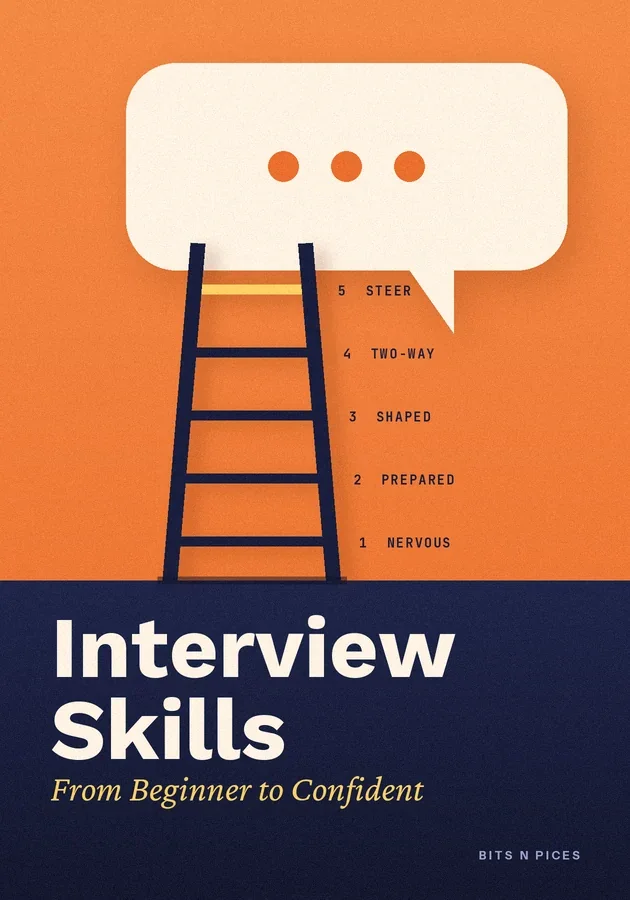
Interview Skills: From Beginner to Confident
Những bài học chính
- Interview skill climbs in five recognisable stages, and knowing which rung you stand on tells you exactly what to practise next.
- The jump from nervous to prepared is mostly logistics and research: know the route, the role and five likely questions before you walk in.
- Structured answers follow a simple shape of situation, what you did and what changed, and that shape rescues you when nerves arrive.
- Confident candidates treat the interview as a two-way conversation, asking questions, following up and admitting gaps without apology.
- Deliberate practice means one weak spot, one drill, feedback from a person, and repeat; you have moved up when the old fear is boring.
Bên trong bit này
- The ladder and finding your rung
Interviewing is a skill, and like swimming or driving it improves in stages rather than all at once. This book describes five rungs.
- Rung one to two: from nervous to prepared
The first climb is mostly logistics, which is good news because logistics can be done the night before. Know exactly where the interview is and how long the journey takes, then add twenty minutes.
- Rung three: giving your answers a shape
Nerves do not stop you knowing things; they stop you organising them out loud. The fix is a shape every answer can follow.
- Rung four: turning it into a conversation
On the fourth rung something shifts: you stop waiting to be asked. You listen to what the interviewer says about the team and refer back to it later.
- Rung five: confident enough to steer
Confidence is not the absence of nerves. It is knowing that whatever happens, you have a move.
- Practising deliberately and knowing you have moved
You do not climb the ladder by doing more interviews; you climb it by practising the specific thing that holds you on your current rung. Deliberate practice has four parts.
Học theo sáu cách
Trực quan hoá, Sơ đồ tư duy, Thực hành, Tình huống, Thử thách và Ôn tập được viết riêng cho cuốn sách này.
Trắc nghiệm và flashcard
Kiểm tra những gì bạn đã đọc và ghi nhớ lâu hơn với lặp lại ngắt quãng.
Bits AI
Trợ lý này trả lời dựa trên cuốn sách, phần học, hay câu trắc nghiệm mà bạn đang làm.





