

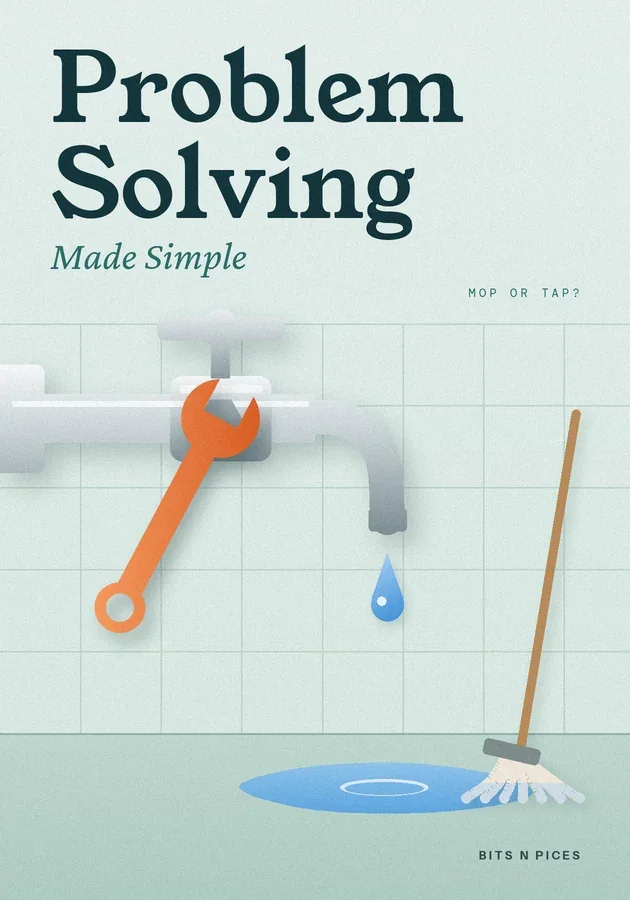
Problem Solving Made Simple
Những bài học chính
- Most everyday problems give way to three plain questions: what exactly is going wrong, why might it be happening, and what small thing can we try?
- Before buying, scolding or fixing, check whether you are mopping the floor or fixing the tap, because only fixing the tap stops the puddle returning.
- Problem solving is a learnable skill, not a talent, so praise the trying and the adjusting in your children rather than the first right answer.
- When your child brings you a problem, ask what they have tried before offering help, and give the smallest hint that gets them moving again.
- Before fixing anything for an upset child or partner, ask whether they want ideas or want you to listen, and respect the answer.
Bên trong bit này
- Why problems feel bigger than they are
When you are tired and busy, problems rarely arrive one at a time. The broken zip, the late homework, the argument about the television and the leaking gutter blur into one feeling: everything is chaos.
- Five myths that make problems harder
Myth one: good problem solvers get it right first time. They try something, check it and adjust, so a first attempt is a draft, not a verdict.
- Mopping the floor or fixing the tap
Picture a leaking tap. Mopping the floor deals with today's puddle; fixing the tap stops tomorrow's.
- What, why, try: the three questions
If you remember one thing from this book, make it three questions. What exactly is going wrong?
- Hand the problem back, gently
When a child brings you a problem, the quickest help is to solve it. It is also the help that teaches least.
- Fix it or listen: ask first
Not every problem wants solving straight away. When a child or a partner arrives upset, a parent's instinct is to fix: here is what you should do.
Học theo sáu cách
Trực quan hoá, Sơ đồ tư duy, Thực hành, Tình huống, Thử thách và Ôn tập được viết riêng cho cuốn sách này.
Trắc nghiệm và flashcard
Kiểm tra những gì bạn đã đọc và ghi nhớ lâu hơn với lặp lại ngắt quãng.
Bits AI
Trợ lý này trả lời dựa trên cuốn sách, phần học, hay câu trắc nghiệm mà bạn đang làm.





