

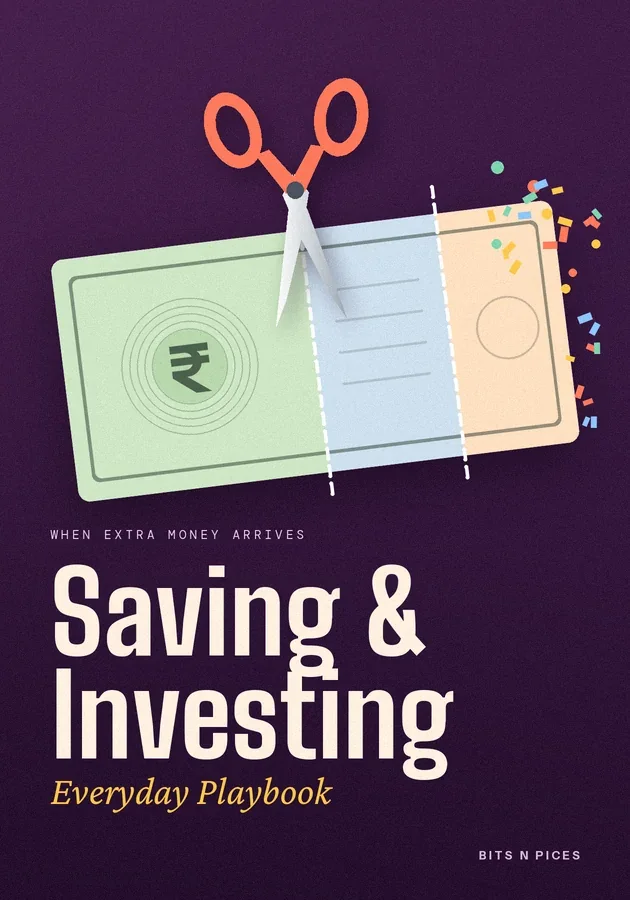
Saving & Investing: Everyday Playbook
Những bài học chính
- On payday, move money in a fixed order, savings first and spending last, so whatever gets squeezed is spending rather than your future.
- When a surprise bill lands, pause to confirm the cost, pay from the emergency fund instead of a card, and write a plan to refill it.
- Answer a child's 'I want it now' with a wish list and a week's wait, and say 'not in this month's plan' instead of 'we can't afford it'.
- Turn down any scheme that cannot show in writing where the money goes, cannot be explained simply, or pushes you to decide fast.
- Agree a split for raises, bonuses and gifts before they arrive, and always include a part the whole family can enjoy.
Bên trong bit này
- Payday: the ten-minute play
The most useful money play happens once a month and takes about ten minutes. When your salary lands, move money in a fixed order before you spend anything: savings first, then bills, then a top-up for the emergency fund if it was used recently, and only then the spending money for the month.
- When a surprise bill lands
The washing machine breaks, the scooter needs new brakes, a child needs new glasses. The play is the same every time.
- When your child wants it now
Every parent hears it: in the shop, online, after a friend's birthday party. The play is to separate the want from the moment.
- When someone offers a sure thing
It might come from a cousin, a colleague or a message forwarded in the family group: a scheme that is safe, pays far more than a bank and needs your answer this week. The play is three questions.
- When markets fall and headlines shout
First, a quick picture. When families invest, they often buy shares, which are small pieces of companies, usually through funds that hold many companies at once.
- When extra money arrives
A raise, a bonus, a tax refund or a gift from grandparents: extra money disappears fastest when nobody has decided what it is for. The play is a split rule agreed before any money arrives.
Học theo sáu cách
Trực quan hoá, Sơ đồ tư duy, Thực hành, Tình huống, Thử thách và Ôn tập được viết riêng cho cuốn sách này.
Trắc nghiệm và flashcard
Kiểm tra những gì bạn đã đọc và ghi nhớ lâu hơn với lặp lại ngắt quãng.
Bits AI
Trợ lý này trả lời dựa trên cuốn sách, phần học, hay câu trắc nghiệm mà bạn đang làm.





