

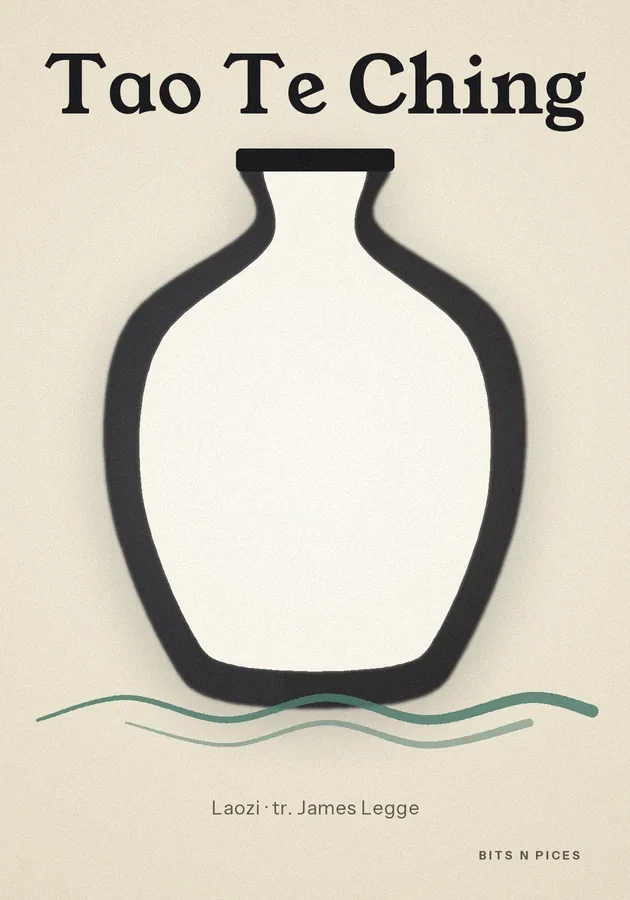
Tao Te Ching
Những bài học chính
- Acting without forcing usually achieves more than pushing against the natural flow
- Softness and patience outlast rigidity, the way water outlasts stone
- Empty space, in a pot or a calendar, is where usefulness lives
- Knowing when you have enough is itself a durable form of wealth
- The best leaders make themselves unnecessary and let people claim the credit
Bên trong bit này
- The way that cannot be named
The Tao Te Ching is a short Chinese text of 81 verses attributed to Laozi, an ancient sage about whom almost nothing is known for certain. James Legge's 1891 translation brought it to English readers, and it has stayed in print because its ideas keep proving useful.
- Effortless action gets more done
The best known idea in the text is wu wei, often translated as non-action, though it really means acting without forcing. A farmer cannot make rice grow faster by pulling on the shoots; the work is to prepare the soil, plant at the right time, and let growth happen.
- Water wins by yielding
Laozi's favourite image is water. It is the softest thing there is, yet it wears away stone, fills any container, and always flows to the lowest place, which is exactly why it ends up with everything.
- Emptiness makes things useful
One of the most striking verses points out that a pot is useful because of the empty space inside it, a wheel turns because of the hole at its hub, and a room is livable because of the space between its walls. We normally value what is present and ignore what is absent, but Laozi shows that the absence is where the use lives.
- The leader nobody notices
A surprising amount of the Tao Te Ching is about ruling, and its advice runs against instinct. The worst leader is feared, the next is despised, a better one is loved and praised, but the best is barely noticed, and when the work is done the people say they did it themselves.
- Put it to work
Pick one situation this week where you have been forcing an outcome, whether a conversation, a project, or a habit, and deliberately step back for 3 days to see what happens on its own. In one disagreement, yield on the small point and notice how much easier the larger point becomes.
Học theo sáu cách
Trực quan hoá, Sơ đồ tư duy, Thực hành, Tình huống, Thử thách và Ôn tập được viết riêng cho cuốn sách này.
Bản đọc audio
Nghe bit này, qua giọng đọc của Michael hoặc Bella.
Trắc nghiệm và flashcard
Kiểm tra những gì bạn đã đọc và ghi nhớ lâu hơn với lặp lại ngắt quãng.
Bits AI
Trợ lý này trả lời dựa trên cuốn sách, phần học, hay câu trắc nghiệm mà bạn đang làm.





