

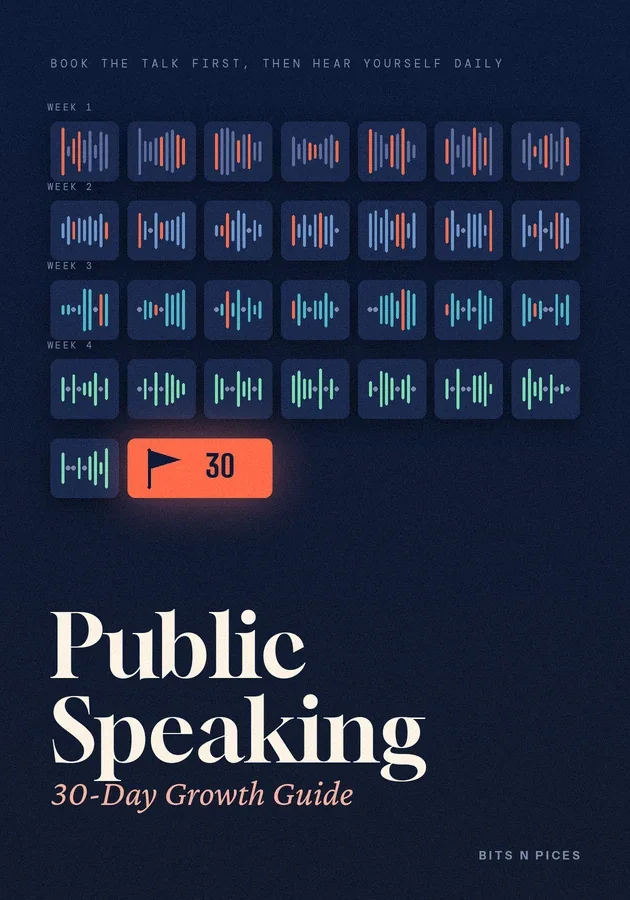
Public Speaking: 30-Day Growth Guide
النقاط الرئيسية
- Book a real five-minute talk for day thirty before you start, because a fixed date and a real audience turn practice into preparation.
- Spend week one speaking aloud and recording yourself every day, since getting used to your own voice matters before any technique.
- In week two, build the talk from your listeners' problem, one story that shows it, one number that sizes it and your proposal.
- Count filler words per minute in your recordings and replace each one with a short pause, so a falling number shows progress.
- When a day slips, do its five-minute version rather than skipping it, and never let yourself miss two days in a row.
داخل هذا الجزء
- Setting up your thirty days
This programme ends with a real talk on day thirty: five minutes, a real audience and a date in the diary. Book it before you begin.
- Week one: getting used to your own voice
Most beginners have never heard themselves speak for more than a few seconds, and the first recording is a shock. Week one gets that shock out of the way.
- Week two: shaping one clear message
Week two builds the talk itself around four parts. Day eight names your listeners' problem in one sentence, in their words rather than yours.
- Week three: pace, pauses and presence
With the words settled, week three works on how they sound and look. Day fifteen counts the filler words in Sunday's recording, such as um, basically and actually, and divides by the minutes to get your fillers per minute.
- Week four: real listeners, real questions
The last stretch moves from practice to performance. Day twenty-two rehearses for someone who does not know your topic, then asks them two questions: can you tell me my point in one sentence, and where did you stop following?
- Keeping score and rescuing lost days
Feelings about progress swing from day to day; counts do not. Every Sunday, copy three numbers into your talk log: minutes spoken aloud that week, fillers per minute in your latest recording, and people who have heard you practise.
تعلمه بست طرق مختلفة
التصور، والخريطة الذهنية، والممارسة، والسيناريو، والتحدي، والمراجعة مكتوبة لهذا الكتاب.
اختبار وبطاقات تعليمية
اختبر ما قرأته واحتفظ به باستخدام التكرار المتباعد.
Bits AI
يجيب عن الكتاب أو القسم أو سؤال الاختبار الذي تقف عنده.





