

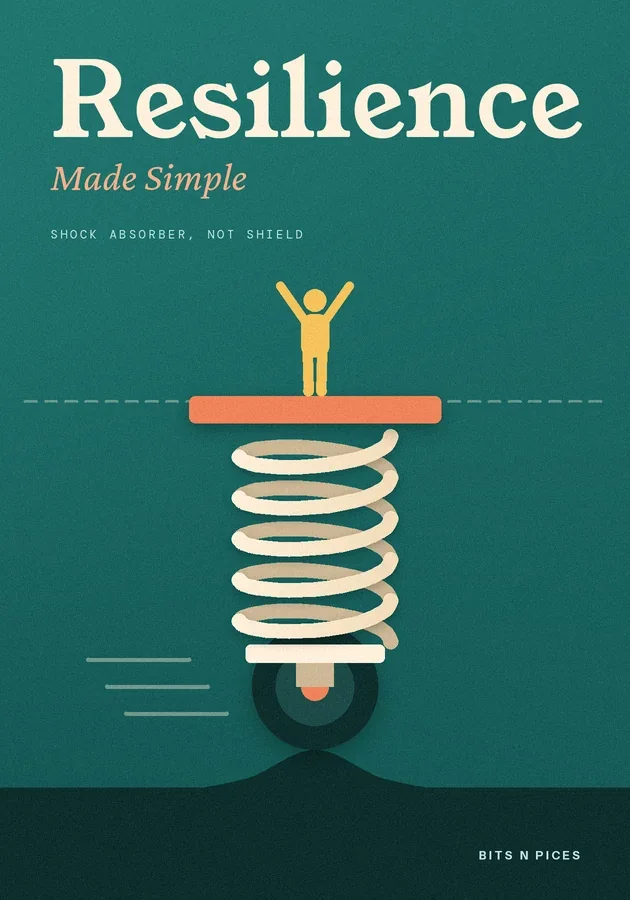
Resilience Made Simple
النقاط الرئيسية
- Resilience works like a shock absorber, not a shield: the aim is not to stop every bump for your child but to help them recover from it.
- Children borrow calm before they own it, so the way you handle your own setbacks out loud is the lesson they remember most.
- A few basics do most of the work: one steady adult, a predictable daily rhythm and challenges sized to stretch a child, not crush them.
- Before offering a fix, name the feeling in plain words; a child who feels understood can think about solutions far sooner.
- Rescuing, praising only talent and comparing siblings feel kind today but weaken resilience later, so hand back small problems your child can manage.
داخل هذا الجزء
- The shock absorber, not the shield
Picture the suspension on a car. It does not stop the road from having potholes; it absorbs each bump so the car keeps going and settles again.
- Four myths that make parents try too hard
The first myth is that some children are simply born resilient. Temperament plays a part, but resilience grows mostly from relationships and practice, which means it can be built at any age.
- The few basics that do most of the work
If you feel overwhelmed, focus on three basics and let the rest go. First, one steady adult.
- Why your own resilience is the lesson
Children learn what to do with frustration less from what we tell them than from what they watch us do. Young children in particular borrow calm from the adults around them before they can produce it on their own; when you steady yourself, you are steadying them too.
- Plain words for hard moments at home
When a child is upset, most parents rush to fix, reassure or explain. The simpler move comes first: name the feeling.
- When helping backfires, and when to call someone
Some kind habits have side effects that show up later. Rescuing, such as finishing a school project or complaining to the school after every disappointment, teaches children that problems are for adults to solve.
تعلمه بست طرق مختلفة
التصور، والخريطة الذهنية، والممارسة، والسيناريو، والتحدي، والمراجعة مكتوبة لهذا الكتاب.
اختبار وبطاقات تعليمية
اختبر ما قرأته واحتفظ به باستخدام التكرار المتباعد.
Bits AI
يجيب عن الكتاب أو القسم أو سؤال الاختبار الذي تقف عنده.





