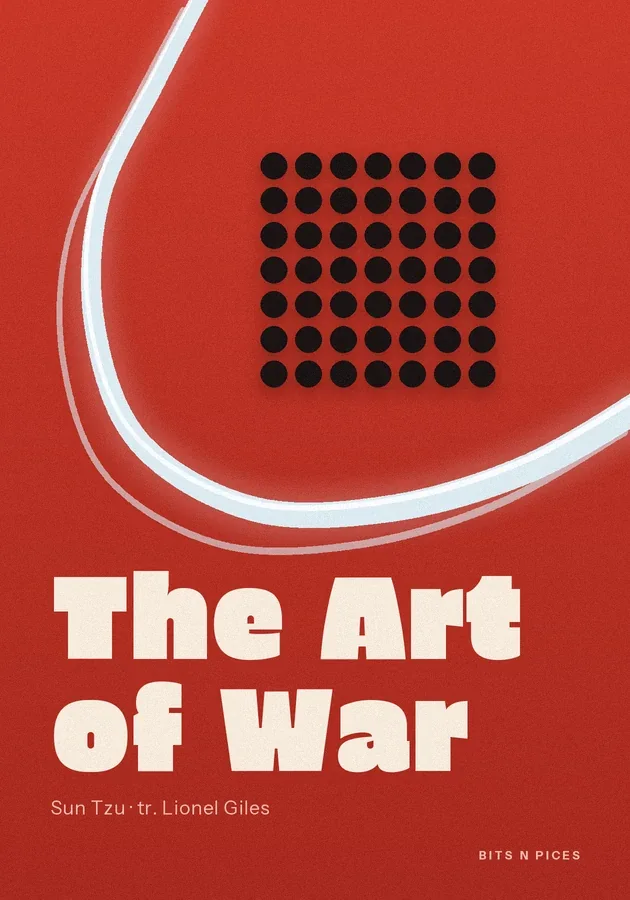
The Art of War
Kernaussagen
- The highest skill is making the battle unnecessary, not winning it
- Kenne dich und deinen Gegner genau, bevor du dich auf einen Kampf einlässt
- Triff die unvorbereitete Seite und bleib selbst unberechenbar
- Lange Feldzüge erschöpfen alle – setze auf Tempo statt langsame Perfektion
- Führung braucht Fürsorge und Strenge, aber keine Schwächen im Temperament
In diesem Bit
- Die Kernidee
Sun Tzu was a general in ancient China, and the 13 short chapters credited to him have been read by soldiers, chief executives, cricket captains and startup founders for roughly 2,500 years. Lionel Giles's 1910 translation is the one most English readers know.
- Der beste Sieg braucht keinen Kampf
Sun Tzu ranks ways of winning. Lowest is besieging a walled city, which drains months and men.
- Kenne dich selbst, kenne die Gegenseite
Sun Tzu's most quoted principle is that if you know your enemy and know yourself, you need not fear the outcome of many battles; if you know only yourself, you will win some and lose some; and if you know neither, you are in danger every time. The book opens with a checklist for this kind of calculation: which side has the moral cause and unity, which understands the weather and terrain, which has the abler commander, which has better discipline and supply.
- Sei formlos wie Wasser
Sun Tzu treats deception and flexibility as the heart of strategy. Show weakness where you are strong and strength where you are weak.
- Tempo, Kosten und der Charakter des Feldherrn
Sun Tzu says he has never seen a long war that benefited any country. Prolonged campaigns exhaust the treasury, blunt the weapons and dampen morale, and they invite other enemies to move.
- In die Praxis umsetzen
This week, before your next confrontation at work or home, ask whether you can make the fight unnecessary by changing the conditions instead of winning it. Write an honest two column assessment of one competitive situation: your real strengths and weaknesses, and theirs, based on evidence rather than hope.
Lerne es auf sechs Arten
Visualisierung, Mindmap, Praxis, Szenario, Challenge und Review wurden für dieses Buch erstellt.
Vertont
Hör dir dieses Bit an, gelesen von Michael oder Bella.
Quiz und Karteikarten
Teste, was du gelesen hast, und behalte es durch Spaced Repetition im Gedächtnis.
Bits AI
Es beantwortet Fragen zum Buch, zum Abschnitt oder zur Quizfrage, bei der du dich gerade befindest.