

Tiny Habits
Kernaussagen
- Verhalten entsteht, wenn Motivation, Können und Auslöser zusammentreffen
- Mach die Gewohnheit so klein, dass sie selbst am miesesten Tag klappt
- Verankere Neues direkt an einer festen Routine
- Feiere dich sofort: Gefühle verankern Gewohnheiten
- Gestalte dein Umfeld, statt nur auf Willenskraft zu setzen
In diesem Bit
- Veränderung fällt leicht, wenn sie winzig ist
BJ Fogg, a Stanford behaviour scientist, once decided to do 2 push-ups every time he went to the bathroom. It sounds silly, but within months he was doing dozens a day without effort.
- Die Verhaltensformel
Fogg's central model says a behaviour happens when 3 things line up at the same moment: motivation, ability and a prompt. He writes it as B equals MAP.
- Mach es so klein, dass es leichtfällt
Fogg suggests two ways to make any behaviour tiny. Either take a starter step, like putting on your running shoes rather than running, or scale down the whole thing, like flossing 1 tooth instead of all of them.
- Docke an bestehende Routinen an
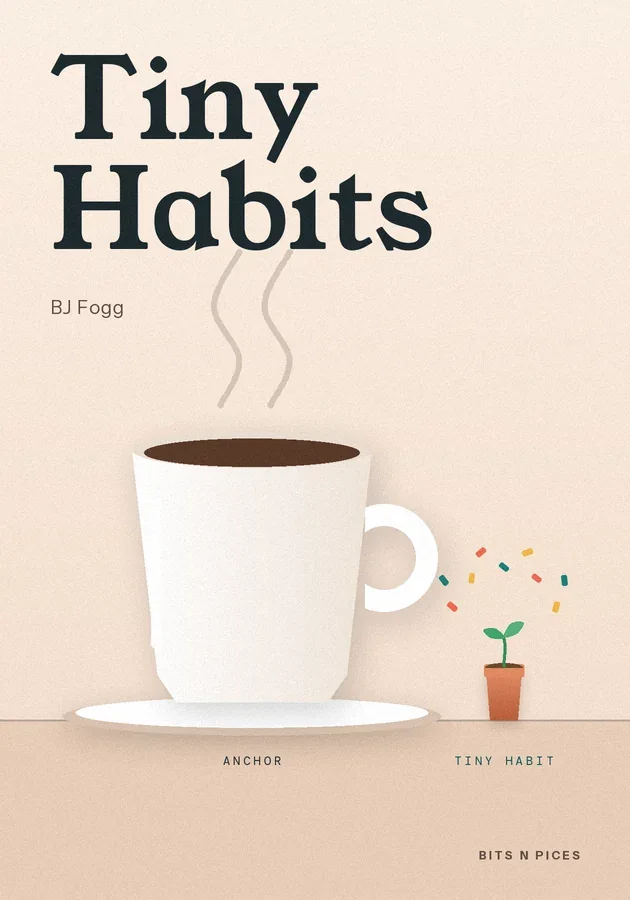
A new habit needs a reliable prompt, and Fogg says the best prompt is a behaviour already in your life. He calls this an anchor.
- Feiere es, um es zu verankern
This is the part most habit advice misses. Fogg argues that habits form through emotion, not repetition alone.
- In die Praxis umsetzen
This week, choose one habit you want and shrink it until it takes under 30 seconds, like 1 push-up or writing 1 sentence. Find an anchor by listing 5 things you already do every day and picking the one that happens in the right place and at the right time.
Lerne es auf sechs Arten
Visualisierung, Mindmap, Praxis, Szenario, Challenge und Review wurden für dieses Buch erstellt.
Vertont
Hör dir dieses Bit an, gelesen von Michael oder Bella.
Quiz und Karteikarten
Teste, was du gelesen hast, und behalte es durch Spaced Repetition im Gedächtnis.
Bits AI
Es beantwortet Fragen zum Buch, zum Abschnitt oder zur Quizfrage, bei der du dich gerade befindest.





