

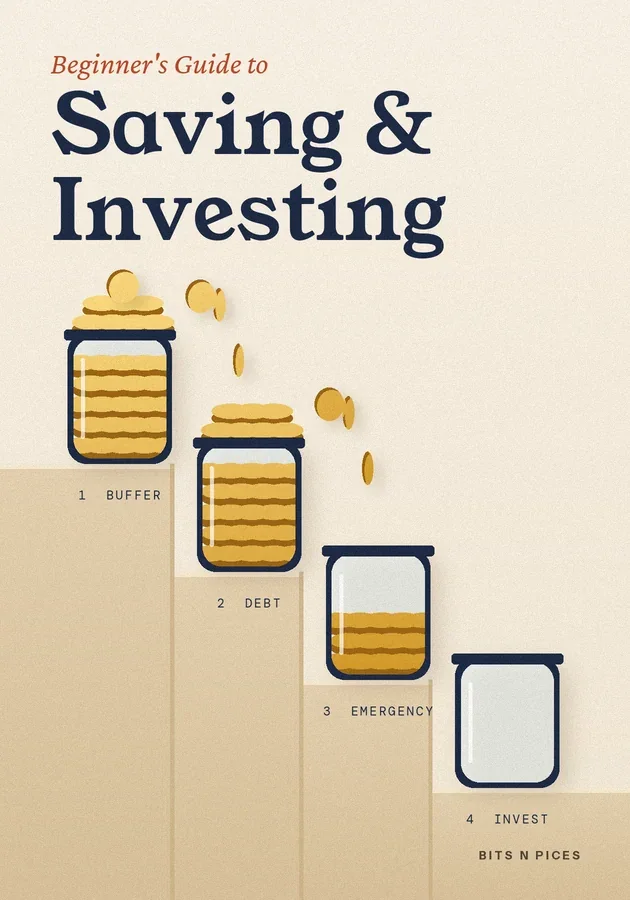
Beginner's Guide to Saving & Investing
Key takeaways
- Saving keeps money safe and ready for known needs, while investing accepts ups and downs in exchange for growth over five years or more.
- Judge every product by its real return, what is left after inflation and fees, rather than by the headline number on the brochure.
- Compounding rewards time more than cleverness, so starting small and early usually beats starting larger and later.
- Build a starter buffer, clear expensive debt and finish an emergency fund before investing regularly in something diversified that you understand.
- Most beginner losses come from behaviour, such as chasing last year's winner, selling in a fall or trusting promises of guaranteed high returns.
Inside this bit
- Saving and investing do different jobs
Saving and investing are often said in one breath, but they solve different problems. Saving means keeping money safe and easy to reach, in a savings account or fixed deposit, for emergencies and goals you can see coming.
- The vocabulary that carries the weight
A few words explain most investing pages. Return is what an investment earns, from price rises, interest or dividends, which are a share of company profits paid to owners.
- Inflation, fees and the power of compounding
Three forces work on your money quietly every year. Inflation is the general rise in prices, which shrinks what each rupee buys.
- Your first moves, in the right order
Investing feels exciting, but it works best on a foundation. Many planners suggest four moves in order.
- Matching risk to the goal
Every investment trades safety against growth. Shares have historically grown most over long periods but have at times fallen by a third or more within a year.
- The classic beginner mistakes
Most beginner losses come from behaviour, not from terrible investments. The first mistake is chasing last year's winner: a fund that jumped 40 percent often attracts a rush of new money just as its run fades.
Learn it six ways
Visualize, Mind Map, Practice, Scenario, Challenge and Review are written for this book.
Quiz and flashcards
Test what you read and keep it with spaced repetition.
Bits AI
It answers about the book, the section, the quiz question you are on.





