

Emerging Technology: From Beginner to Confident
Key takeaways
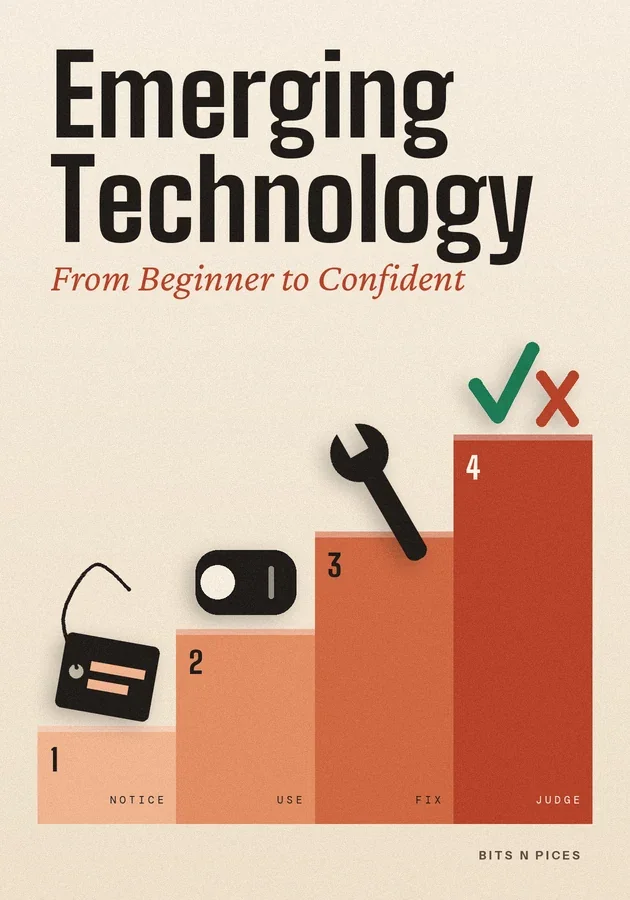
- Confidence with new technology grows in four rungs: noticing and naming, using with care, adjusting and fixing, and finally judging and choosing.
- At the first rung, spot the new technology in your day and learn its proper name, because vocabulary turns vague worry into questions.
- Before relying on a new tool, read its permissions and change one default, because careful use starts with knowing what it does unasked.
- When something breaks, follow a calm fixing order: restart, update, isolate the problem, then search the exact error message before asking for help.
- You have moved up a rung when you can explain a tool to someone else, fix a small fault yourself and reject a claim with a reason.
Inside this bit
- Four rungs and where you stand today
Nobody goes from nervous to confident with new technology in one leap. The path looks more like a ladder with four rungs.
- Rung one: noticing and naming
The first rung is awareness. New technology is often invisible until you look for it.
- Rung two: using a tool with care
At the second rung you move from noticing to using on purpose. The skill here is not speed; it is knowing what a tool does before you rely on it.
- Rung three: adjusting and fixing
The third rung is where confidence starts to feel real, because you can fix things. Most small faults respond to the same calm order.
- Rung four: judging and choosing
The top rung is judgement. Here you can look at a new technology, weigh its claims and decide whether it deserves a place in your life or work.
- Practising deliberately and proving progress
Climbing the ladder is not about reading more; it is about practising in small, deliberate repetitions. Deliberate practice means picking a task just beyond your current rung, doing it and noting what happened.
Learn it six ways
Visualize, Mind Map, Practice, Scenario, Challenge and Review are written for this book.
Quiz and flashcards
Test what you read and keep it with spaced repetition.
Bits AI
It answers about the book, the section, the quiz question you are on.





