

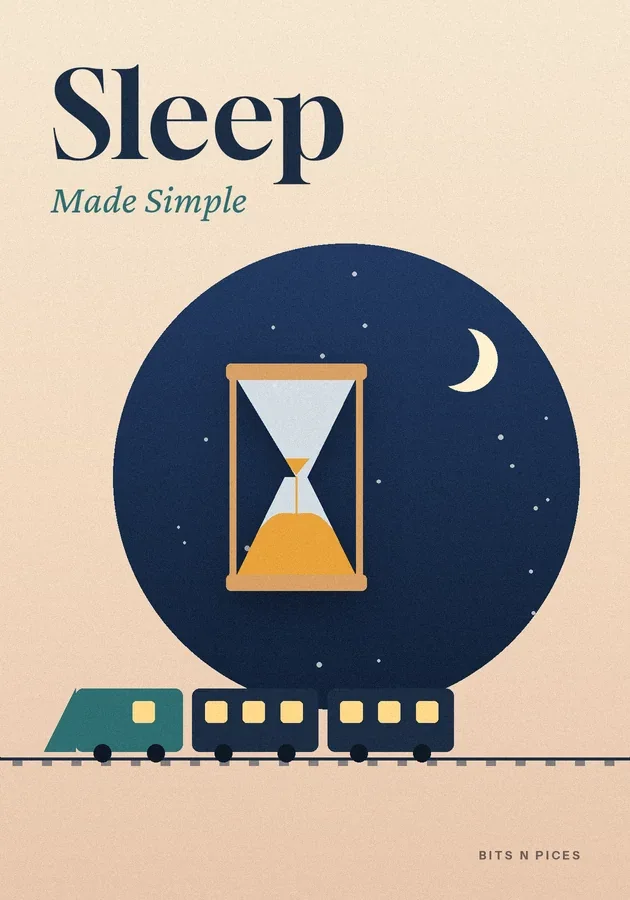
Sleep Made Simple
Key takeaways
- Picture sleepiness as sand filling a timer all day and the body clock as a train timetable; bedtime is easy when both say sleep.
- Drop the myths: weekend lie-ins do not fully repay the week, a nightcap breaks up sleep, and overtired children often settle harder, not faster.
- Four levers do most of the work: a steady wake time, daytime light and movement, a dim screen-free last hour, and a bed kept for sleep.
- Teenage body clocks commonly run later, so agree a deal that protects the wake time instead of fighting over an early bedtime every night.
- Protect your own sleep by taking time for yourself earlier in the evening, because children copy what they see far more than what they hear.
Inside this bit
- Two pictures that explain almost everything
If sleep science feels like too much, hold on to two pictures. The first is a sand timer.
- Five myths that keep families tired
Myth one: you can catch up at the weekend. A modest lie-in helps a little, but sleeping hours later moves everyone's clock and makes Sunday night and Monday morning harder.
- The few habits that do most of the work
Families are busy, so it helps to know that a handful of levers do most of the work. The first is a steady wake time for the household, because the morning sets the clock for the night ahead.
- Teenagers and the clock that runs late
Around the teenage years, the body clock commonly shifts later. A fifteen-year-old who is wide awake at 9:30 may not be defying you; the sleep train on their timetable simply leaves later than it did when they were ten.
- Your own sleep is the example they copy
Children learn more from what they see than from what they hear. A parent who says screens off while scrolling in bed teaches the opposite lesson.
- Judgement calls and when to ask for help
Simple rules still need judgement. Festivals, weddings, travel and illness will push bedtimes around, and that is fine when you bend the routine on purpose.
Learn it six ways
Visualize, Mind Map, Practice, Scenario, Challenge and Review are written for this book.
Quiz and flashcards
Test what you read and keep it with spaced repetition.
Bits AI
It answers about the book, the section, the quiz question you are on.





