

The Lean Startup
Key takeaways
- A startup is an experiment in extreme uncertainty, so treat every plan as a hypothesis
- Build the smallest thing that tests your riskiest assumption, then measure what real users do
- Validated learning, not features shipped, is the true measure of startup progress
- Judge growth with cohort metrics and split tests, not vanity numbers like total signups
- Decide on a schedule whether to pivot or persevere, and pivot without shame
Inside this bit
- Startups are experiments, not plans
Picture two founders in a Bengaluru co-working space. They spend 8 months building a polished app in secret, launch it, and hear silence.
- Build, measure, learn in tight loops
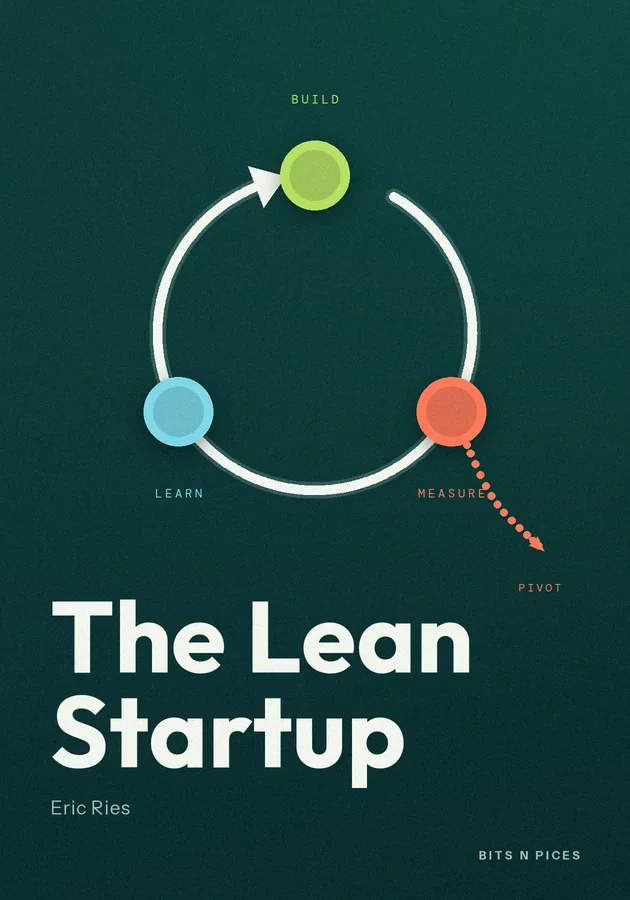
The engine of the book is a loop. You build something small, measure how real people respond, learn from the data, and go around again.
- The minimum viable product
The minimum viable product, or MVP, is the smallest thing you can put in front of real users that tests your most important assumption. It is not a cheap, broken version of the final product; it is a targeted experiment.
- Vanity metrics versus real learning
Total signups keep going up. Page views keep climbing.
- Pivot or persevere
At some point the data stops improving. The loop runs, the numbers barely move, and the team keeps hoping the next feature will fix it.
- Put it to work
Start by writing down the single riskiest assumption behind whatever you are building, the one that would sink the idea if it were wrong. Then design the cheapest possible test of that assumption, whether that is a landing page, a WhatsApp poll, a manual version of the service, or 10 honest conversations with potential customers.
Learn it six ways
Visualize, Mind Map, Practice, Scenario, Challenge and Review are written for this book.
Narrated
Listen to this bit, read by Michael or Bella.
Quiz and flashcards
Test what you read and keep it with spaced repetition.
Bits AI
It answers about the book, the section, the quiz question you are on.





